 Enter
Enter




Introduction
The Blue Flags of Greece are signs of a prestigious environmental award for beaches, and this sunny country deservedly ranks second in the world by the number of such “titled” coastal areas.
The Blue Flag programme is managed by the Foundation for Environmental Education (FEE), headquartered in Denmark. It gives travelers confidence that the seawater has passed the strictest laboratory tests and that the coastline is equipped according to high safety and service standards.
But how many Blue Flag beaches are open in Greece this season, and which resorts should you choose to find the cleanest beaches in Greece with crystal-clear water? In this article, we will review the criteria behind the award, explain why Greece is among the top countries by the number of certified beaches, and present a detailed list of resort areas in the “Blue Flag Greece” category on the islands and on the mainland.
Top highlights
Quick essentials
Greece ranks 2nd in the world by the number of beaches awarded the Blue Flag.
A beach must meet 33 strict criteria for water quality, safety, service, and environmental management.
Crete and Halkidiki are among the regions with the widest choice of certified beaches.
Blue Flag helps tourists choose beaches with clean water, lifeguards, and convenient infrastructure.
The list of beaches is updated every year, and the flag can be withdrawn during the season if standards are violated.
What the Blue Flag means on a beach
The “Blue Flag” for a beach is like a “Michelin star” for a good restaurant. Receiving this environmental certificate is extremely difficult: a beach must comply with 33 strict criteria, which are checked every year by national and international inspectors.
The main requirements are divided into four key blocks:
1. Water quality. This is the most critical parameter. Water samples are taken at least 5 times during the swimming season. Laboratory analysis must confirm the absence of pollution and compliance with international microbiological standards.
2. Environmental management. The beach must have a well-organized waste collection system, including separate collection of plastic, glass, and paper. Any industrial impact is strictly prohibited in the recreation area.
3. Safety and service. The shore must have lifeguard posts, medical points, and clearly marked swimming zones. Access to drinking water and toilets is also mandatory. Special attention is paid to an “accessible environment” — ramps and facilities for people with reduced mobility.
4. Environmental education. The beach must have information boards about local flora and fauna, rules of behavior in protected areas, and the current condition of the water.
Additional criteria for receiving the “Blue Flag”:
- regular cleaning of sand or pebbles from natural and human-made waste;
- absence of wastewater and polluting discharges;
- protection of vegetation and natural ecosystems;
- emergency action plans in case of environmental accidents or extraordinary situations;
- prohibition of unauthorized vehicle movement.
How many Blue Flag beaches are there in Greece?
Why are there so many Blue Flag beaches in Greece? Are the cleanest beaches, the unique microclimate, or the developed infrastructure what make Greek resorts some of the most prestigious in Europe?
The popularity of the programme in Greece is explained not only by natural advantages, but also by the active participation of local municipalities and hoteliers in preserving the nature of the Mediterranean basin. Greece’s coastline is about 16,000 kilometers long, and a significant part of it is protected by international environmental programmes.
How many Blue Flag beaches are there in Greece? According to the latest reports, the number of awarded sites in Greece has exceeded 600 beaches. This allows the country to hold 2nd place in the world for many years among more than 50 participating countries, second only to Spain.
Blue Flags in Greece:
Indicator
Value
Number of Blue Flag beaches in Greece
Around 620, updated annually
Place in the world ranking
2nd place
Leading mainland region
Halkidiki — around 100 flags
Leading island region
Crete — around 150 flags
Main sea areas
Aegean, Ionian, and Cretan seas
The best Blue Flag beaches in Greece
For tourists, the presence of the “flag” is the main landmark when looking for a place for a flawless beach holiday in Greece. The choice of a specific resort for a summer vacation depends on your preferences: whether you are looking for seclusion in a quiet lagoon or developed infrastructure for a family holiday with children.
The cleanest and most popular beaches in Greece, which confirm their status year after year, are listed below.
Blue Flag beaches in Crete
Blue Flags on Crete are a sign of trust, guaranteeing travelers crystal-clear waters of the Aegean and Libyan seas and a high level of service. Although the island’s most beautiful “Instagram-famous” beach areas — Elafonisi, Balos Lagoon, and Falassarna — are known worldwide, they do not always receive Blue Flag status. This is because in protected areas it is extremely difficult to maintain strict infrastructure standards without disturbing the unique ecosystem.
When choosing the best Blue Flag beaches in Crete, tourists from Chisinau often prefer convenient and well-equipped locations:
- Ammoudara is the closest certified beach to Heraklion Airport, only 15 minutes away. This 5-kilometer sandy strip is ideal for families with children and for those who prefer staying in All Inclusive hotels.
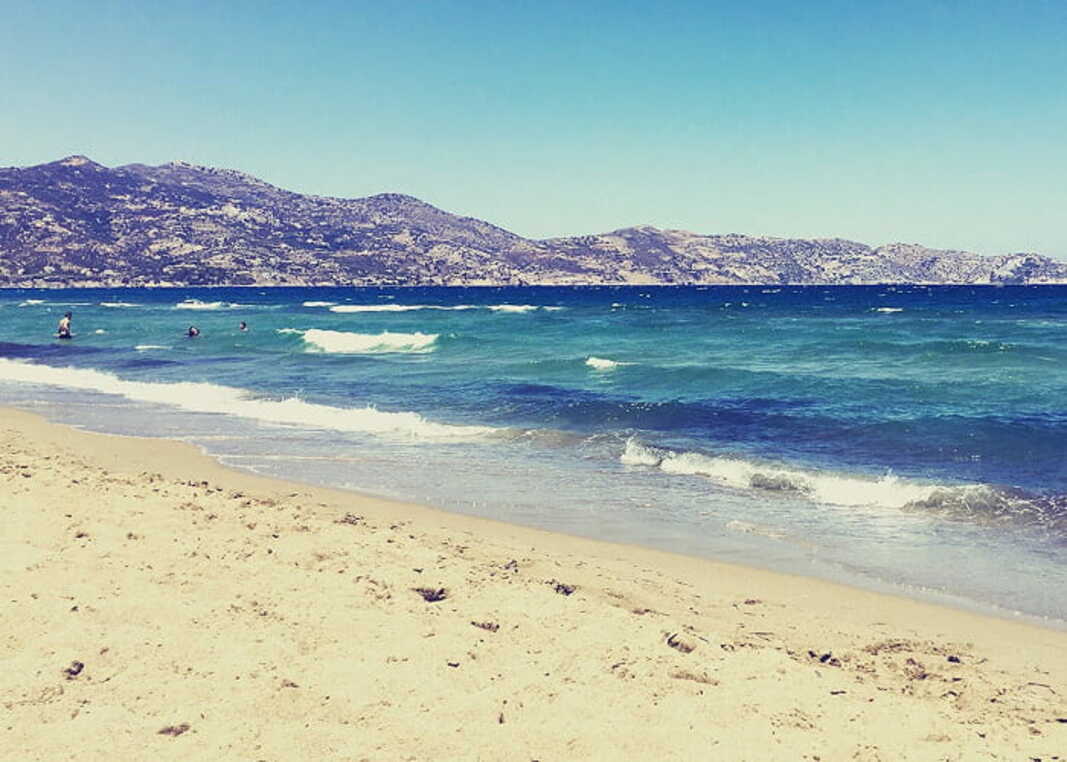
- Anissaras is a recreation area with a high level of service in the Hersonissos area, located next to popular chain hotels. Equipped access points and professional lifeguards make this coast an excellent choice for active travelers.
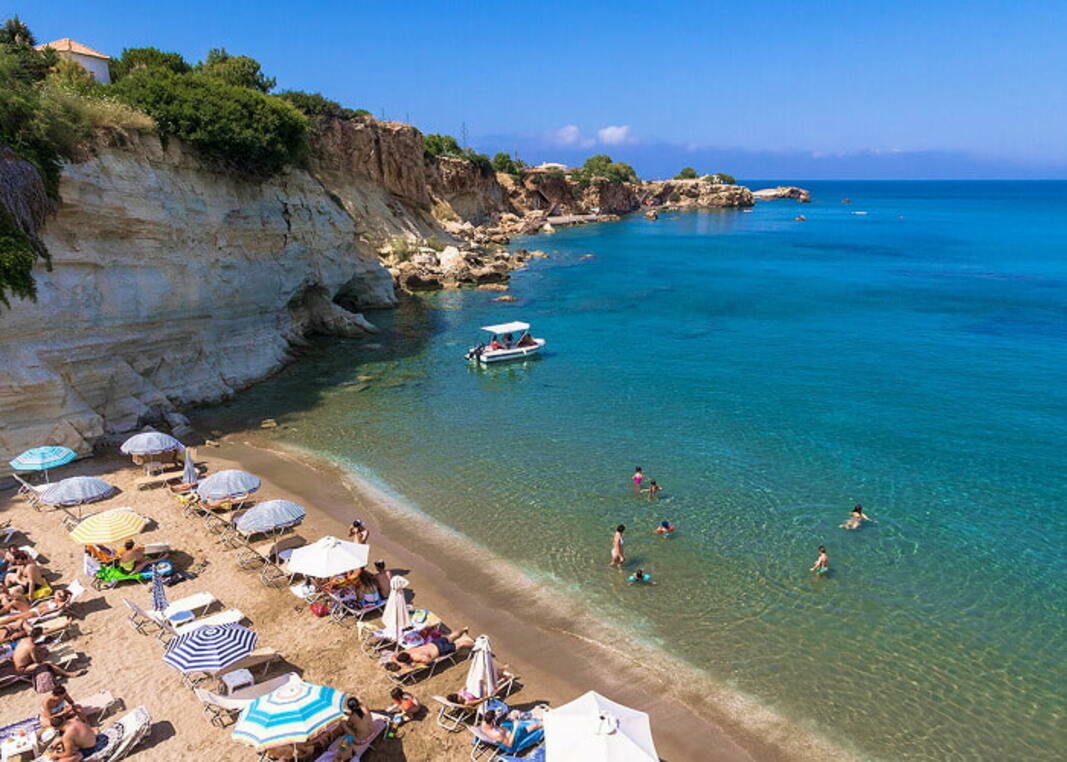
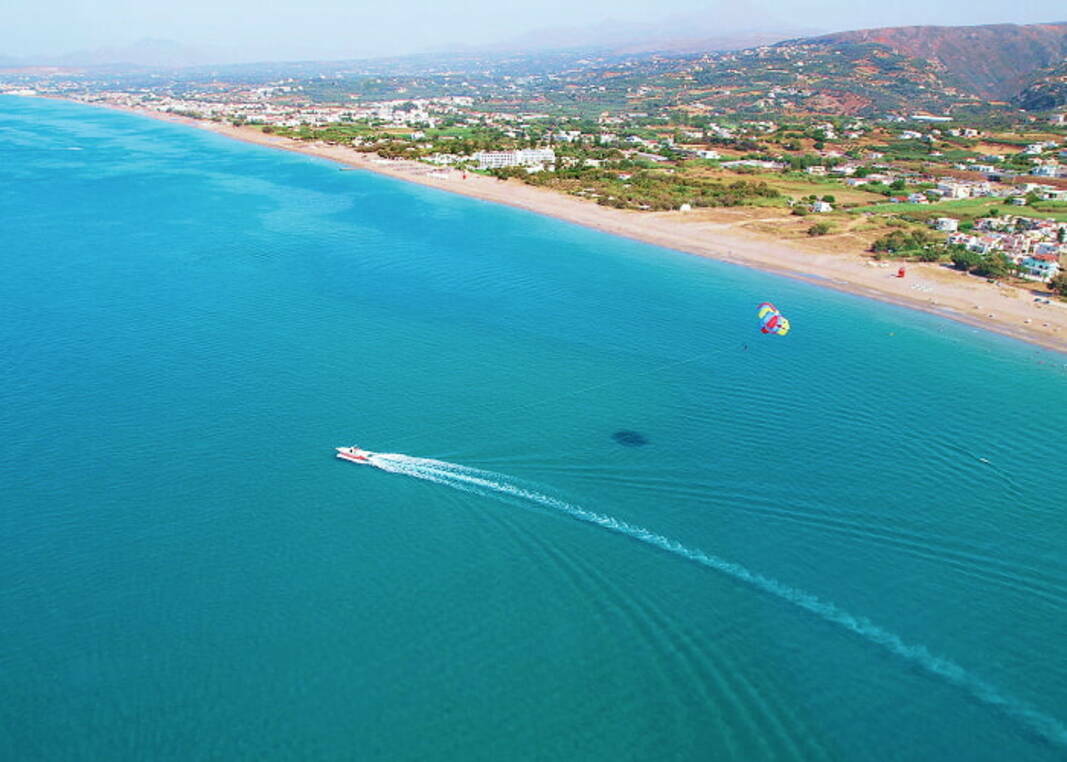
- Rethymno Beach is a huge golden beach 12 km long, harmoniously combining seaside relaxation with walks among old Venetian architecture. The rare Caretta-caretta turtles that choose this shore confirm the impeccable ecology of the area. It is an ideal option for a romantic seaside holiday in Greece.
Blue Flag beaches in Rhodes
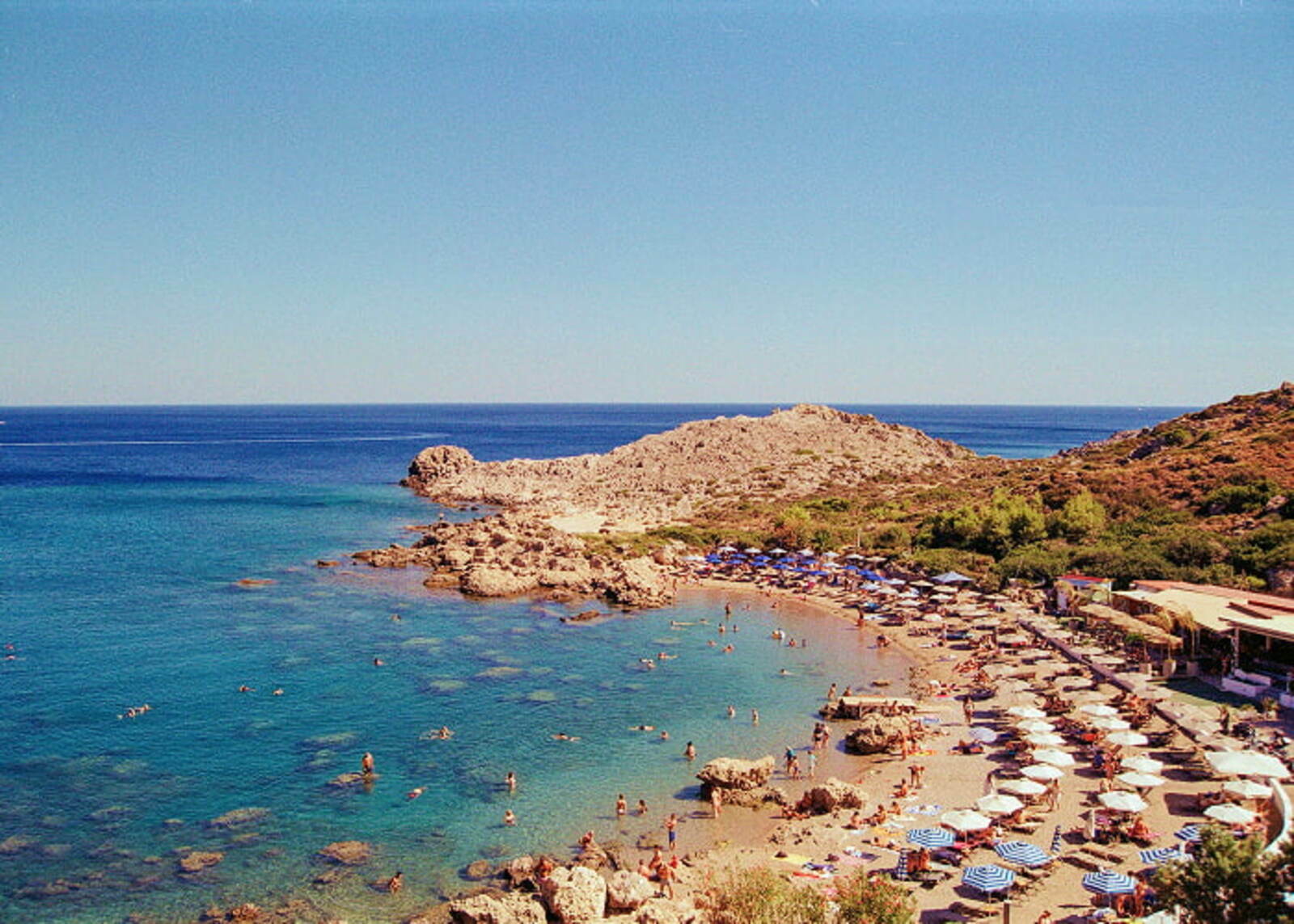
Blue Flag beaches in Rhodes guarantee clean water, safe entry into the sea, and well-designed infrastructure. Among tourists choosing trips to the island of Rhodes from Chisinau, three beaches are especially popular:
- Faliraki Beach is a multi-kilometer sandy beach with developed infrastructure: showers, lifeguards, and sports equipment rental points. It is perfect for families and active holidays.
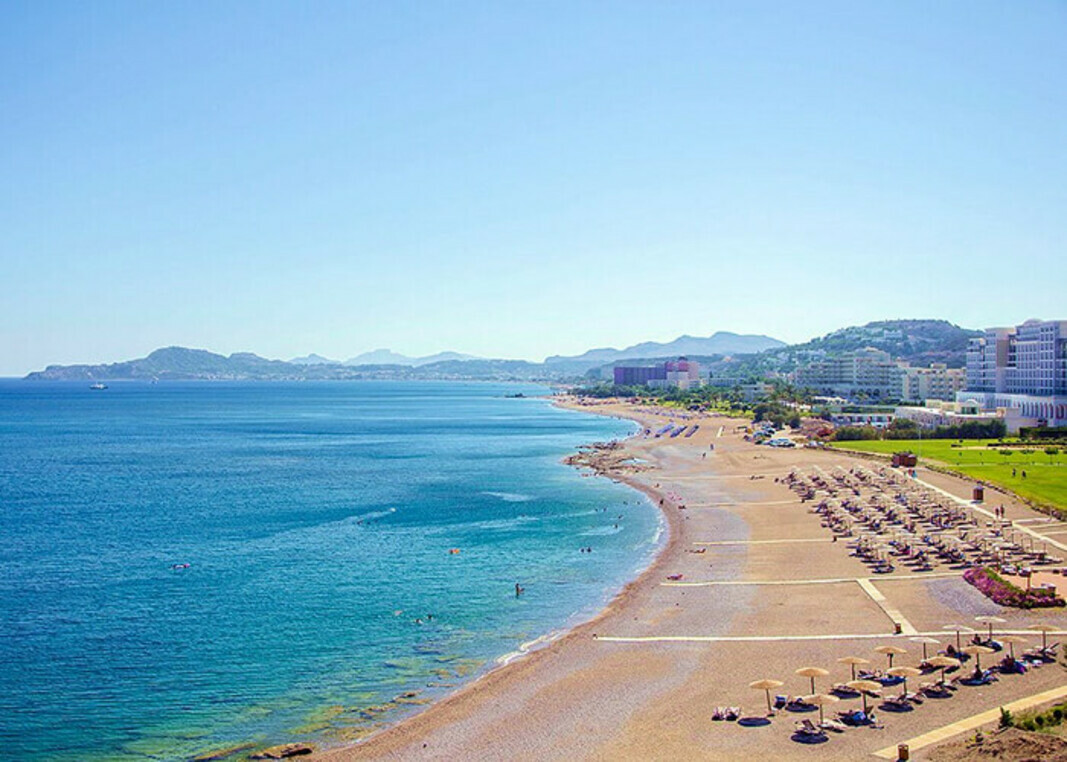
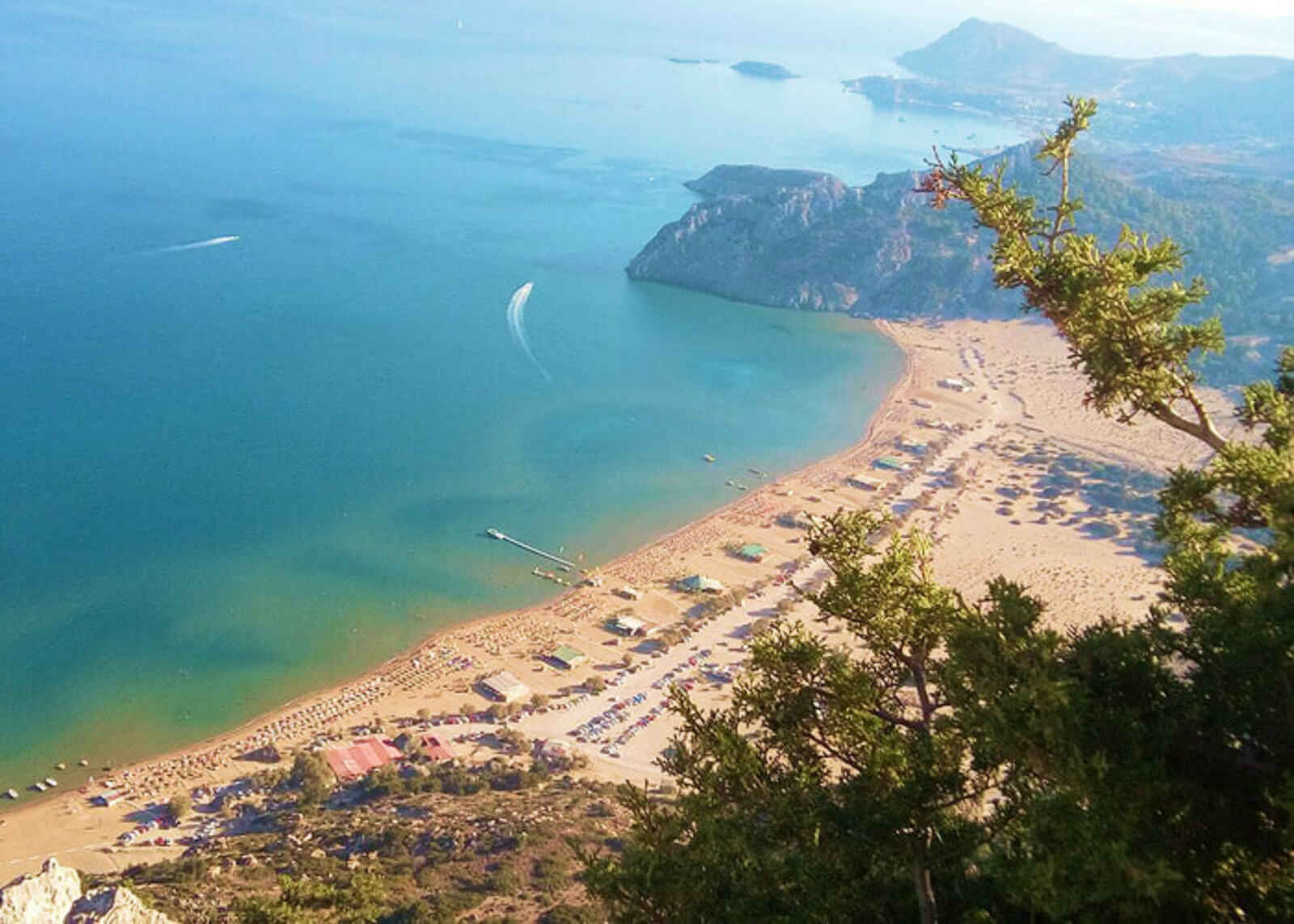
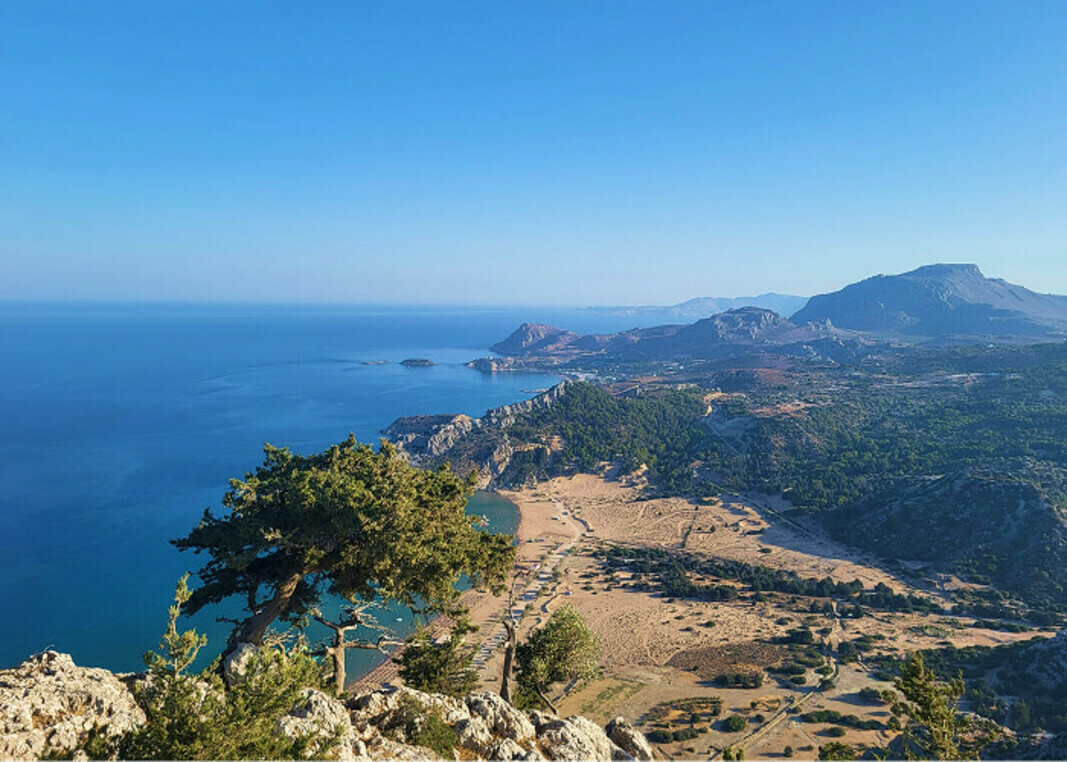
- Tsambika Beach has golden sand and a gentle entry into the water, making it a favorite choice for families with children. Cleanliness and service ensure regular confirmation of its Blue Flag status.
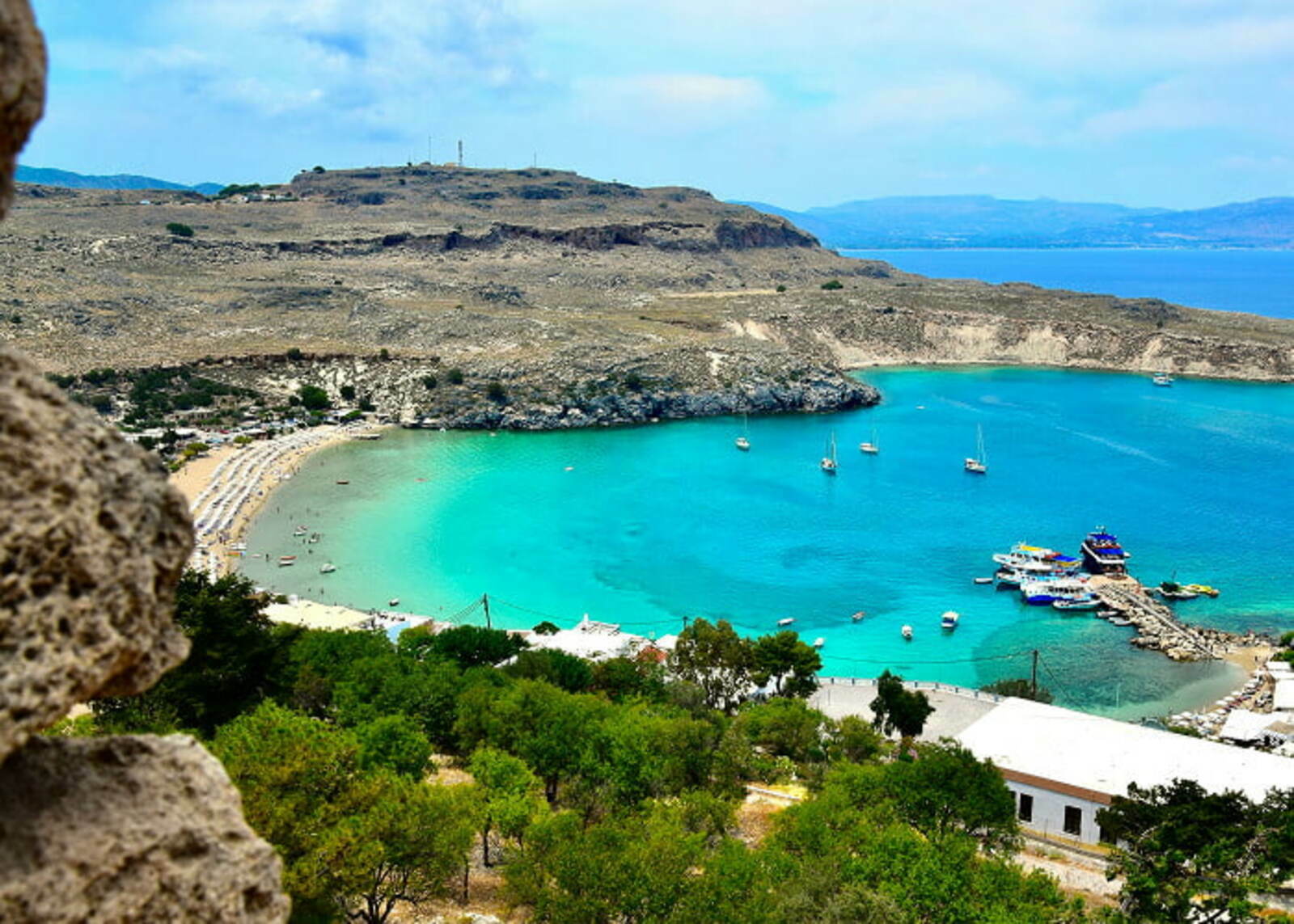
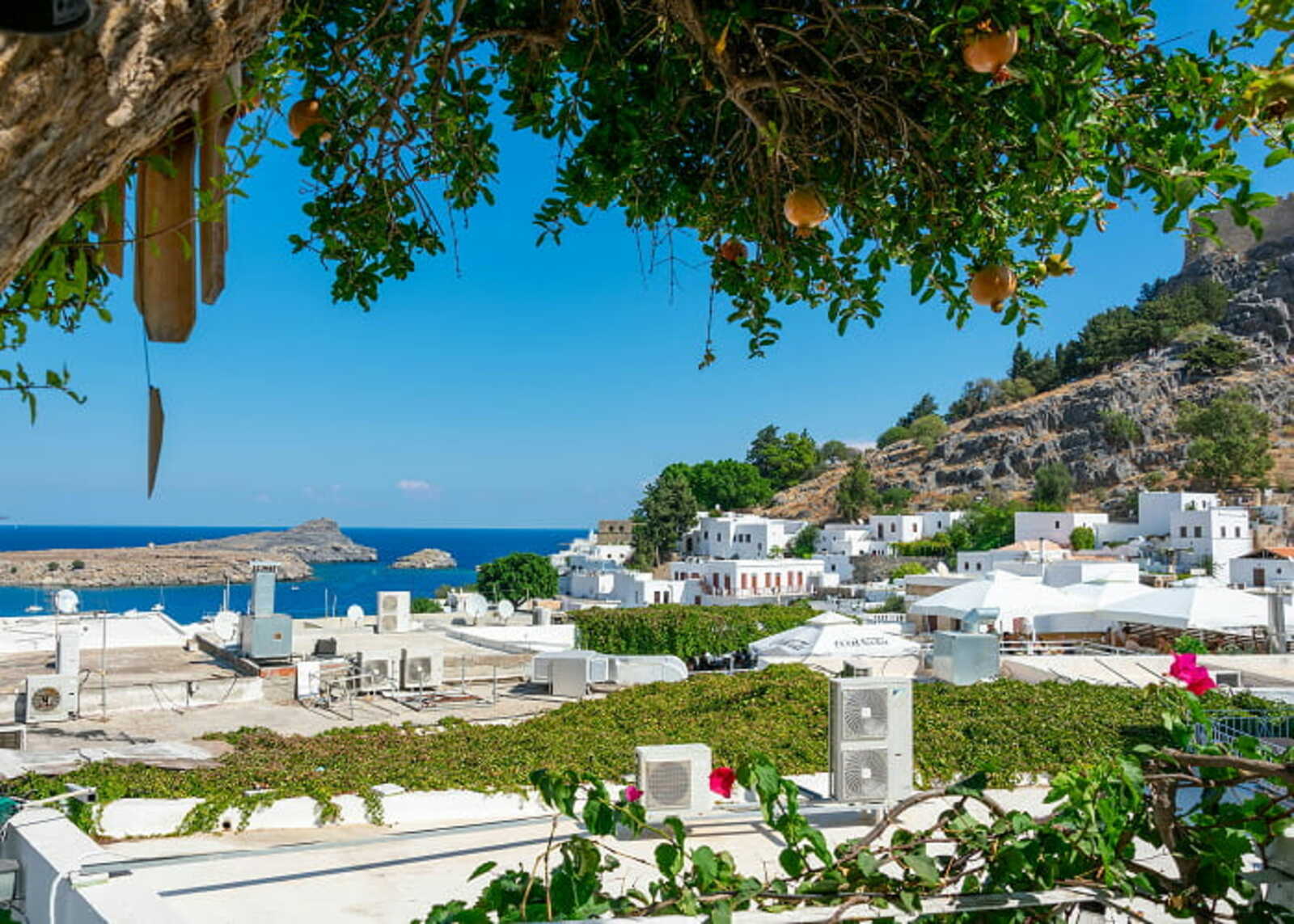
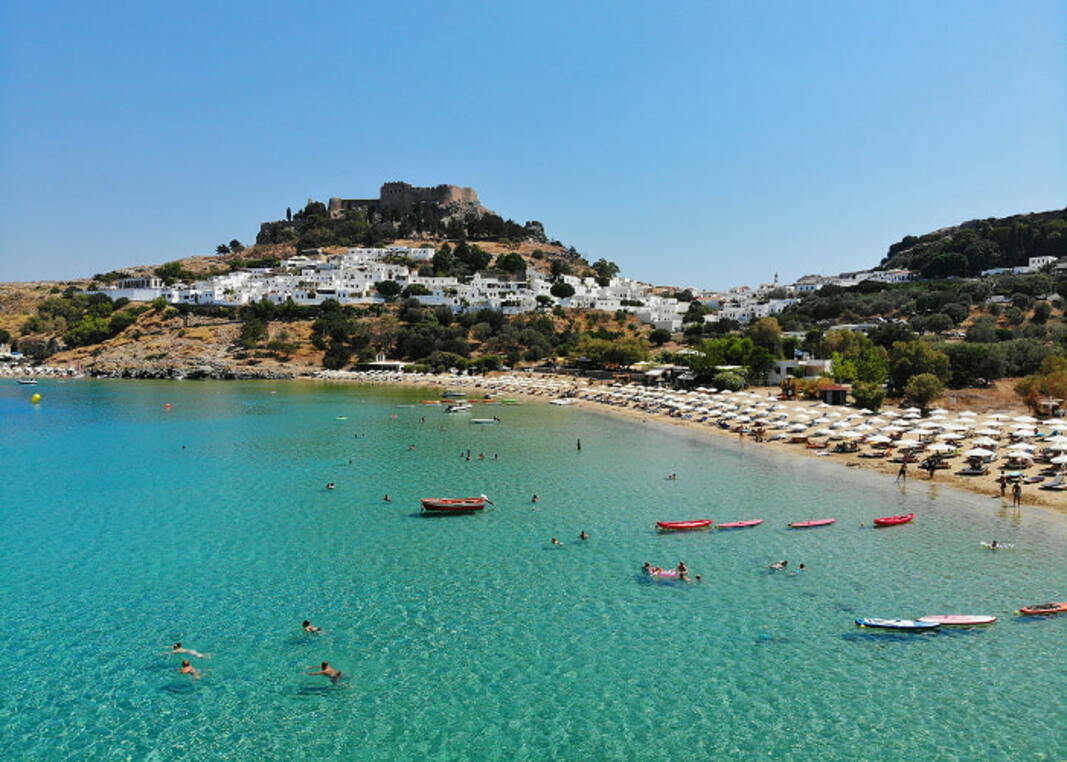
- Lindos Beach is a cozy bay at the foot of the ancient Acropolis with crystal-clear water. It is a great option for a calm holiday and romantic trips.
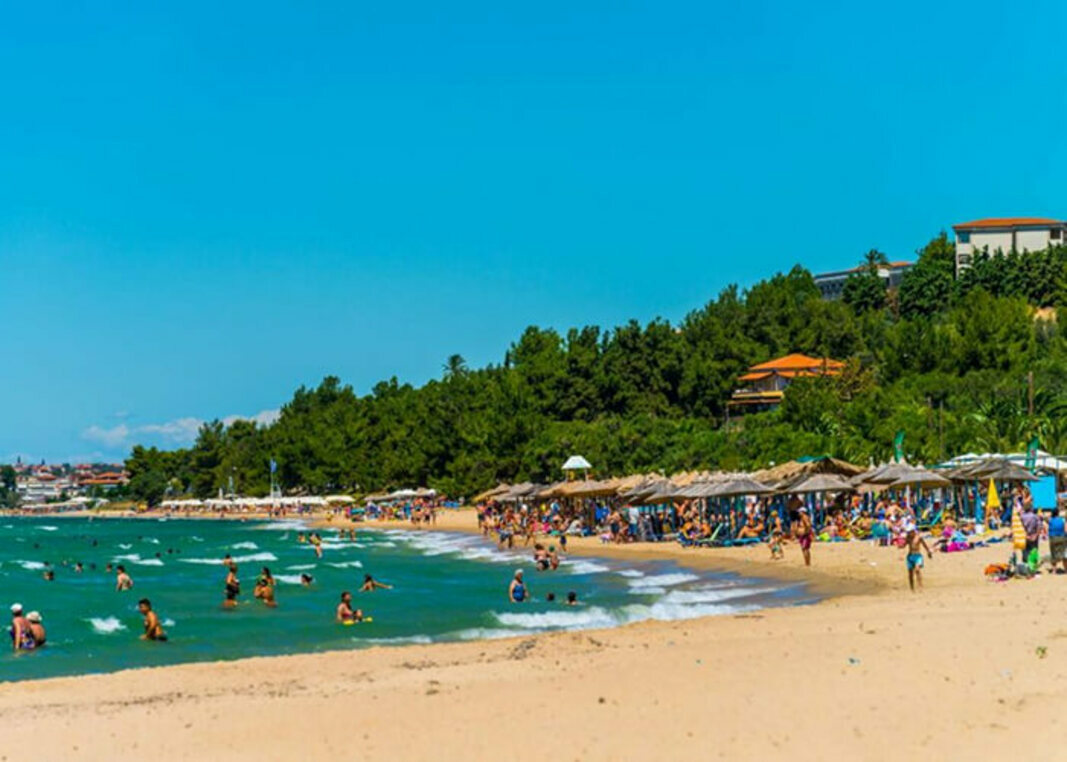
Blue Flag beaches on the Halkidiki peninsula
A beach holiday in Halkidiki is the best choice when you are looking not only for the cleanest beaches in Greece, but also for pine forests that come right down to the water and create a healing microclimate. If you are interested in beaches with an environmental certificate on mainland Greece, Halkidiki will offer you the best options on the “fingers” of Kassandra and Sithonia, while the most popular among tourists from Moldova are:
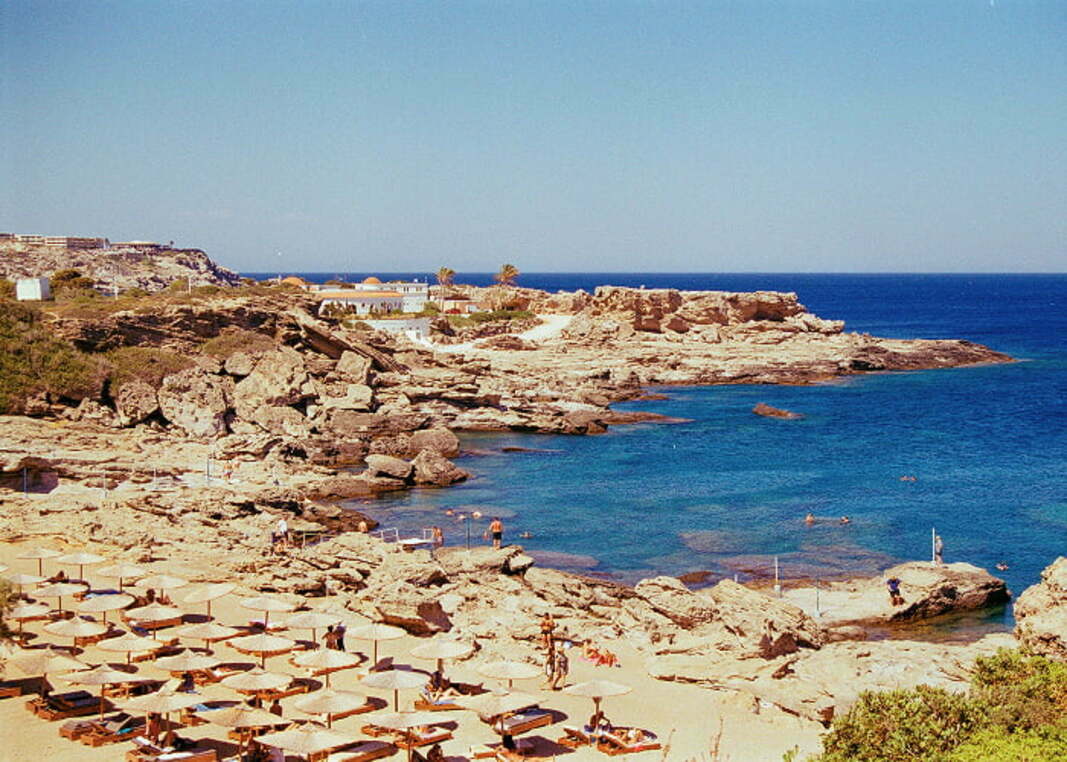
- Kallithea Beach means emerald waters of the Aegean Sea, sand, and convenient infrastructure. The combination of beauty and service makes the beach popular with families and young travelers, thanks to the resort’s active daytime and nightlife.
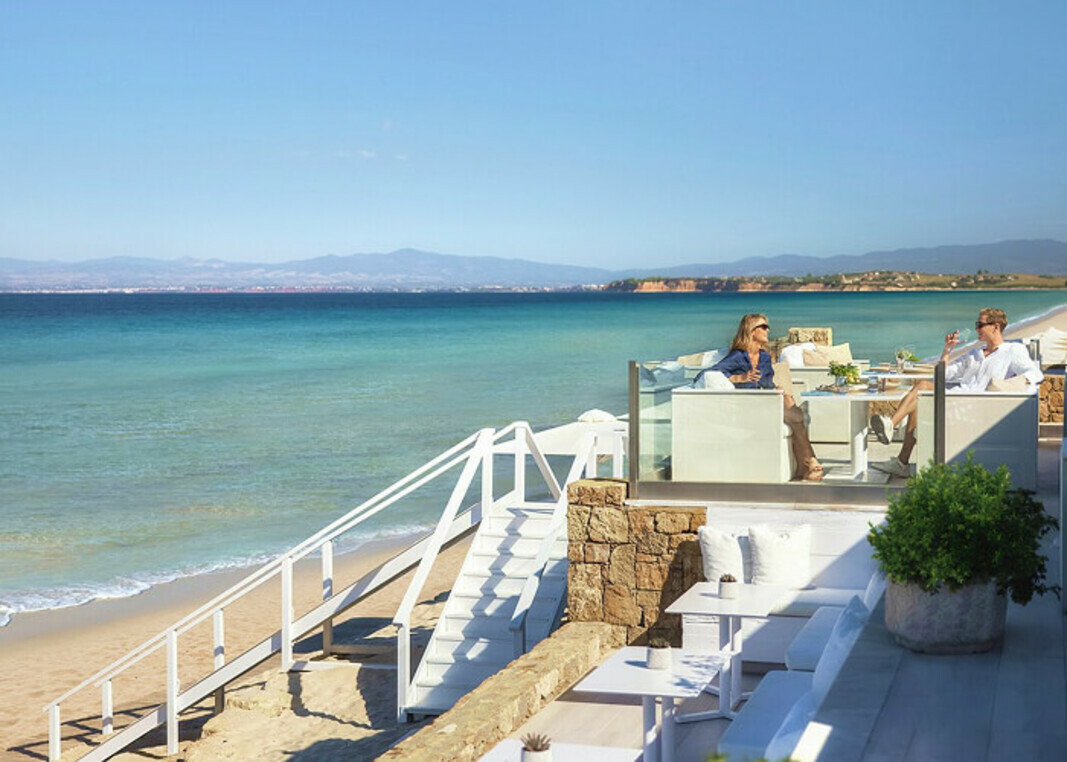
- Sani Beach is an elite eco-zone on the western shore of Kassandra, located within a private nature reserve. It is a benchmark Blue Flag beach: snow-white sand and turquoise water attract the most demanding travelers.
- Nea Moudania Beach is a strategically convenient beach for those who value proximity to infrastructure and a quick transfer. It has a wide sandy shore with shallow water, and the infrastructure is designed for families and adapted for people with reduced mobility.
How beaches are selected for the Blue Flag award
The Blue Flag award is not just a beautiful symbol, but the result of a strict selection process. In Greece, coastal monitoring is handled by the Hellenic Society for the Protection of Nature (EEPF), which annually checks each location for compliance with the criteria listed above.
The certification process goes through several stages:
- Application submission. Municipalities or owners of coastal hotels submit a dossier with data on water quality from previous years and confirm the presence of lifeguards, cleaning systems, and tourist facilities.
- National commission. Experts carry out unannounced on-site inspections throughout the season and take water samples to confirm microbiological cleanliness.
- International jury. The final decision is made by the FEE headquarters in Denmark, evaluating not only the figures, but also the beach’s contribution to sustainable tourism.
- Monitoring. If a violation is detected on the beach during the summer, the flag is immediately lowered and the award is annulled.
Environmental monitoring includes not only chemical water analysis, but also observation of the condition of coastal dunes, preservation of rare plant species, and protection of Caretta-caretta sea turtles, which often choose clean Greek beaches for laying eggs. It is this comprehensive approach that makes Greece’s Blue Flag beaches a benchmark of safety and cleanliness.
How can a tourist choose the best beach?
To make your summer holiday in Greece comfortable and unforgettable, choose Blue Flag beaches and follow a few simple rules on site:
1. Look for the official symbol. Every certified beach must have an information board with the Blue Flag emblem for the current year.
2. Check the infrastructure. The presence of the flag guarantees toilets, showers, and lifeguard posts.
3. Consider the region. If you want several clean beaches nearby, focus on Halkidiki and Crete — regions with the largest number of certified recreation areas.
4. Keep track of the season. The list of Blue Flag beaches is updated every year in May. A beach’s status may change if violations of quality or safety standards are found on site.
5. Choose an eco-friendly approach. Use biodegradable sunscreen, keep the beach clean, and take your waste with you if the special bins are full.
A holiday in Greece on Blue Flag beaches is not only a guarantee of crystal-clear water and pleasant swimming, but also your personal contribution to preserving the unique ecosystem of the Mediterranean.
Popular tours to Greece from Chisinau to Halkidiki, Crete, Rhodes, Kefalonia, or Corfu allow you to enjoy pristine landscapes without giving up modern comfort and conveniences for the whole family. Impeccably clean sea, incredible sunsets, soft sand, and trusted service await you!
FAQ: Blue Flags in Greece
What does the Blue Flag mean on a beach?
It is an international environmental award confirming clean water, safety, and a high level of infrastructure.
How many criteria must a beach meet?
A beach must meet 33 strict criteria related to water, service, ecology, and safety.
When is the Blue Flag list updated?
The list of beaches is usually updated every year in May, before the active summer season.
Can a beach lose its Blue Flag?
Yes, if violations of quality, safety, or environmental management standards are identified during the season.
Which regions of Greece are especially popular?
Popular destinations include Crete, Rhodes, and Halkidiki, where there are many convenient resort beaches.
Are Blue Flag beaches suitable for children?
Yes, such beaches are often chosen by families thanks to lifeguards, toilets, showers, and clear zoning.
Does the flag guarantee clean water?
The flag means that the water undergoes regular laboratory checks and meets strict standards.
Why do some beautiful beaches not have a flag?
In protected and wild areas, it is difficult to develop infrastructure without harming the natural ecosystem.
Where can I find the official Blue Flag symbol?
A certified beach must have an information board with the emblem for the current year.
Which beaches in Crete do tourists often choose?
Convenient options include Ammoudara, Anissaras, and Rethymno Beach.
Which beaches in Rhodes are mentioned in the article?
The article highlights Faliraki, Tsambika, and Lindos.
What can tourists do to help preserve the beach?
Keep the beach clean, do not leave waste behind, and choose an eco-friendly approach during the holiday.