
 Enter
Enter






Why Raa Atoll is worth considering
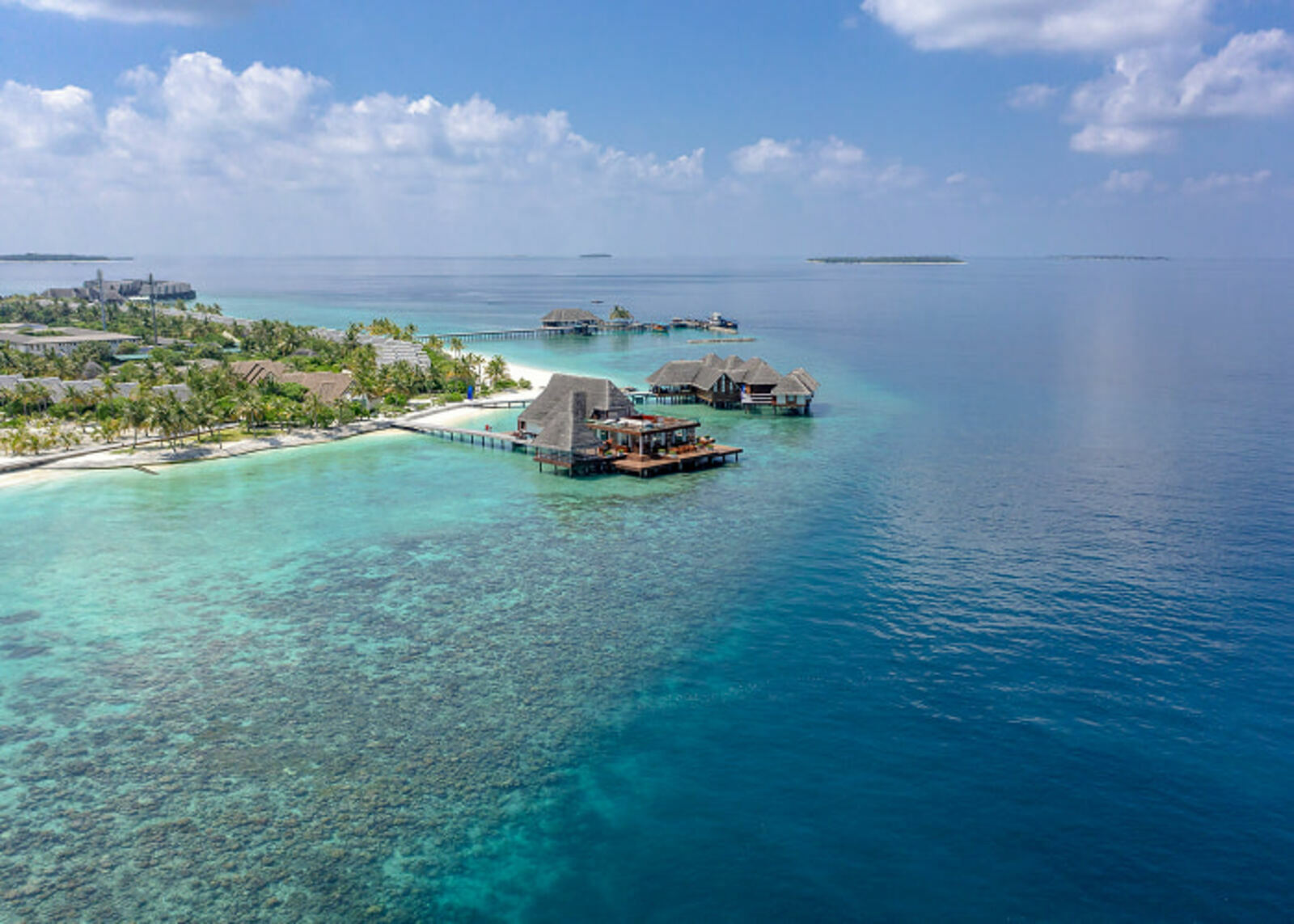
The best atoll in the Maldives, where a vacation is worth flying more than 10 hours from Chisinau or Bucharest, is the one where the Indian Ocean is crystal clear, the corals are alive and bright, and the hotels exist in full harmony with nature. Many of our tourists have named exactly this place — Raa (Raa Atoll), a ring of tropical islands in the northern part of the archipelago.
Raa Atoll (North Maalhosmadulu) is especially appreciated by couples in love and guests seeking seclusion. This is a resort region for those who are ready to give themselves the luxury of forgetting about everyday matters: to start the morning with an exotic breakfast in the pool, spend the day swimming among tropical fish and sunbathing on white sand, and at night watch the mesmerizing “neon” glow of plankton.
What to do on Raa Atoll, how best to get there, and other travel details from the experts of Admiral Travel — today we will talk about the region’s features and how life is arranged on island resorts.
Top highlights
What to understand before booking
Raa is about privacy. The atoll is especially loved by couples, honeymooners, and guests who want quiet without crowds.
The ocean is the main treasure. Here you will find living reefs, clear water, manta rays, turtles, and excellent snorkeling conditions.
Logistics matter. The islands are reached either by seaplane or through the combination of domestic flight + speedboat.
The resort decides everything. Even neighboring resorts may differ greatly in reef quality, lagoon size, atmosphere, and service.
The season affects the budget. January to March brings the best weather, while May to November often offers better prices.
What is important to know about Raa Atoll
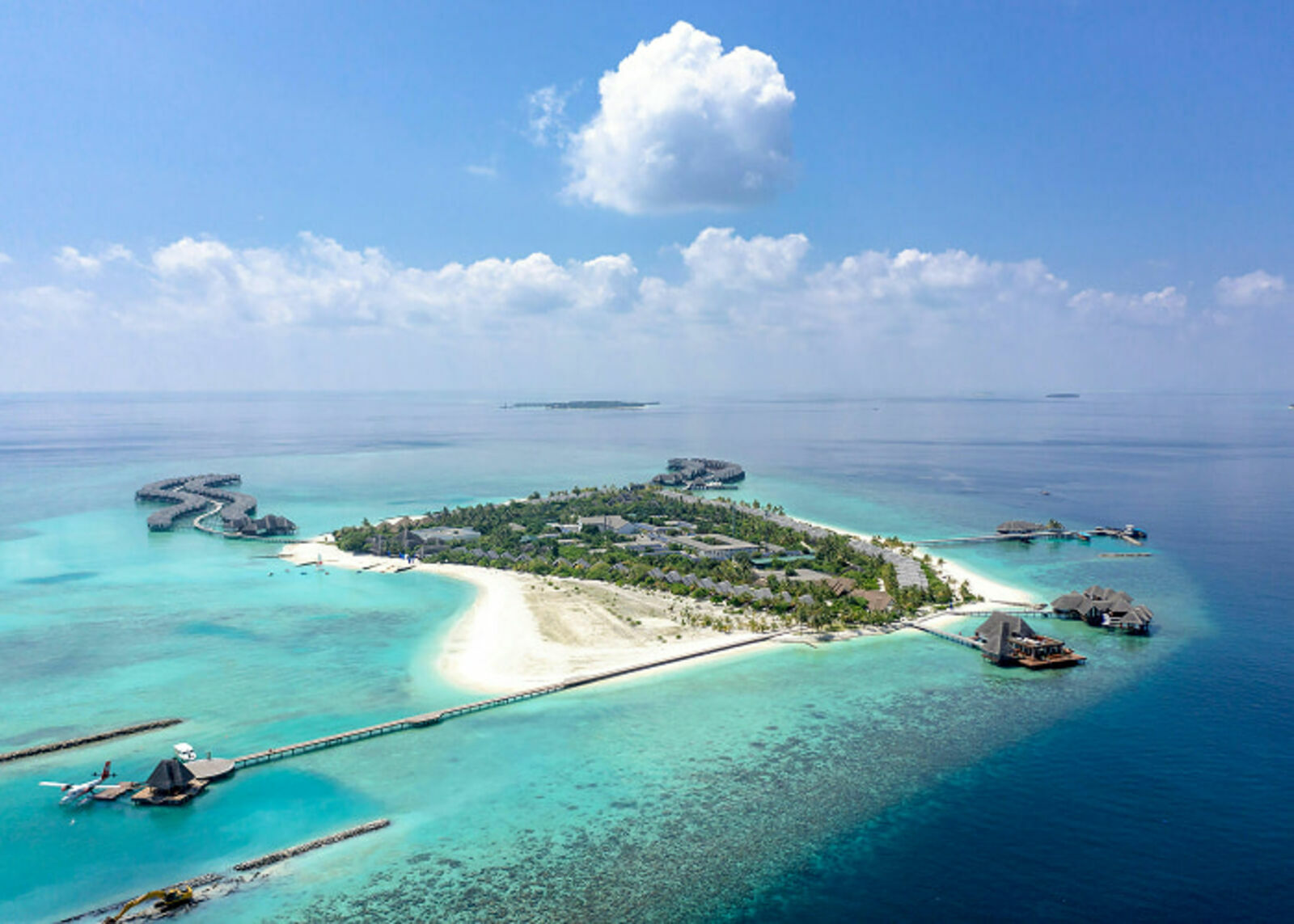
Raa Atoll is located approximately 150–180 kilometers north of the international airport in Male. Is this close or far by Maldivian standards? In fact, it is a medium distance from the capital, but enough for the ocean here to remain crystal clear, the corals to keep their rich colors, and the marine fauna to stay diverse.
The transfer to Raa Atoll usually takes 45 minutes by seaplane directly to the hotel jetty (a more expensive and premium arrival format, available only during the day), or by domestic flight to the local Ifuru airport + a speedboat ride.
Unlike the shallow atolls of the central part of the archipelago, Raa cuts deeply into the ocean. It has a unique underwater relief: caves, underwater plateaus, and tunnels (for example, Reethi Thila), where divers go for extreme drift diving — diving in strong currents.
Snorkeling in the Maldives is a special pleasure: right on the house reef you can see schools of colorful fish, turtles, and peaceful reef sharks, but it is around Raa Atoll that huge rays, safe for humans, live all year round. Manta rays have created a kind of “cleaning station” here: they circle above the reef, giving special cleaner fish the chance to feed.
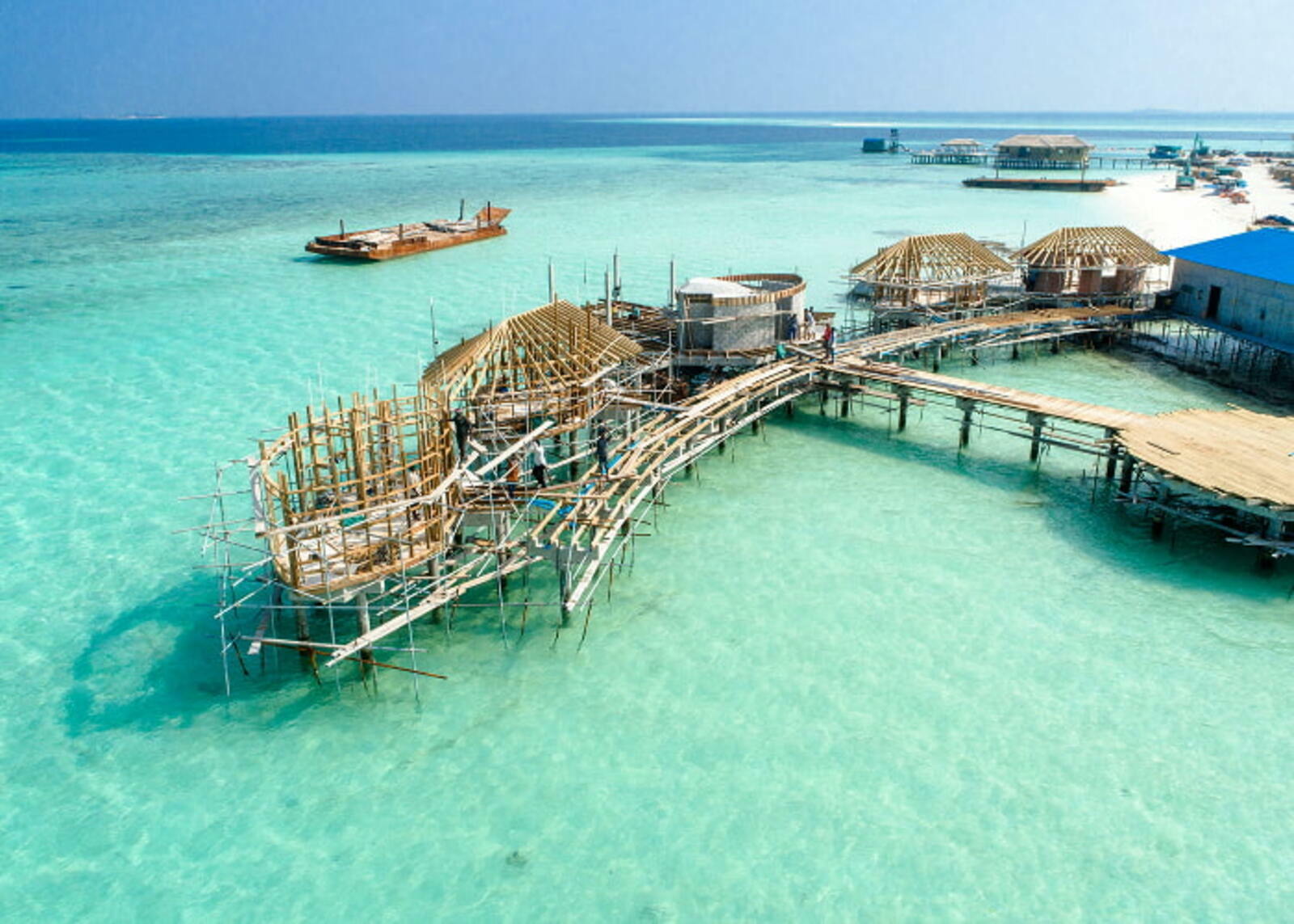
The resorts of Raa were built later than those in Male or Ari and were originally designed around the concept of modern eco-luxury.
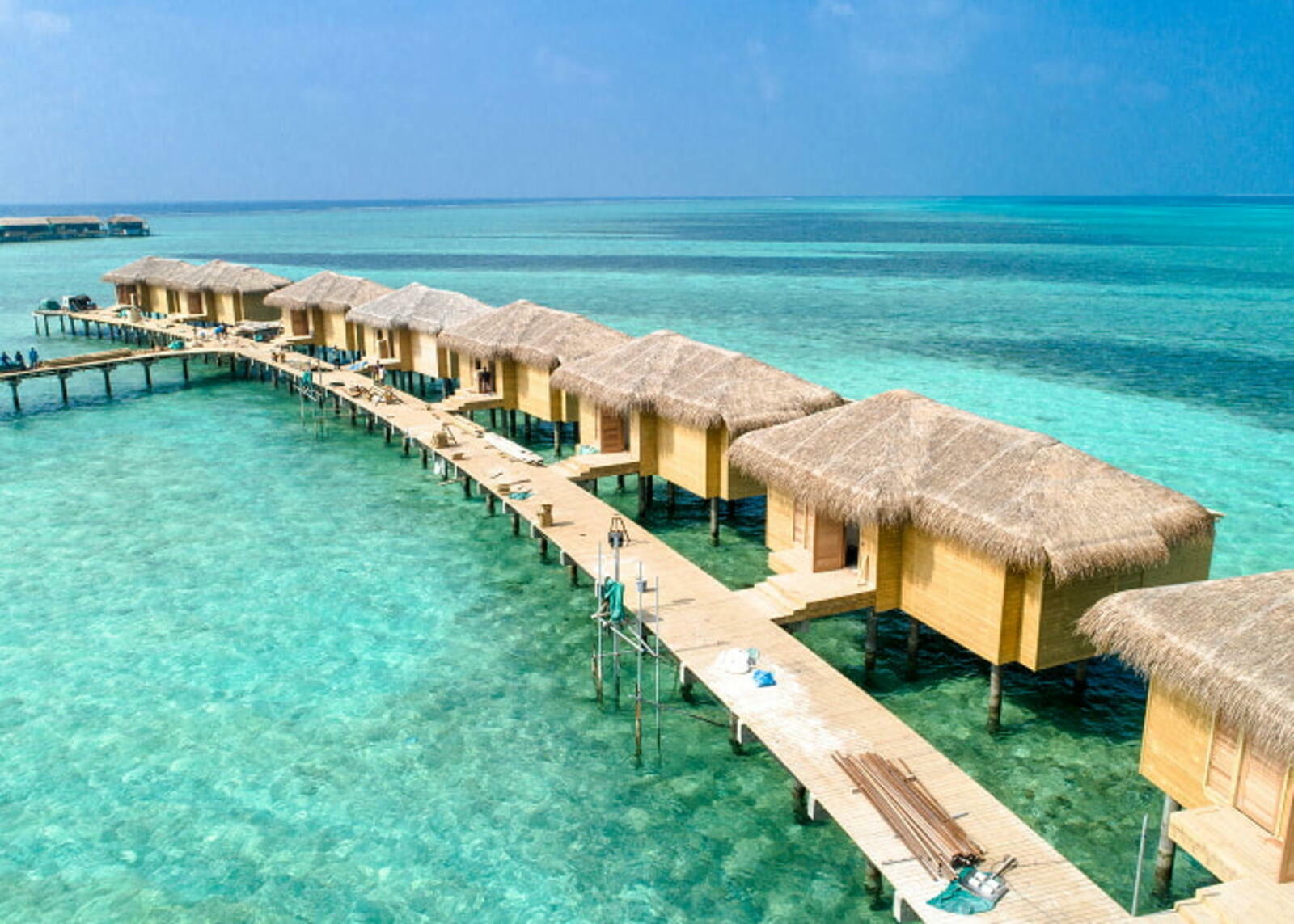
The classic Maldivian system “one island — one resort” operates here, with extensive use of natural materials and local architectural traditions. In the villas, both beach villas and overwater villas, panoramic glazing is common, while pools are often designed according to the infinity principle — without visible edges — making it seem as if the water flows directly into the ocean.
Excursions on Raa Atoll are a unique chance to touch the living history and culture of the region. The island of Rasgetheemu is considered the birthplace of the Maldivian monarchy, while Alifushi is a center of traditional boatbuilding, where craftsmen manually create wooden Dhoni boats. In the local Thundu Kunaa mats, travelers from Moldova and Romania are surprised to recognize geometric motifs from their own carpets, and basket weaving here is as widespread as in our region.
Who Raa Atoll is suitable for
According to Admiral Travel’s many years of experience and tourist reviews, the hotels of this Maldivian region are especially suitable for:
couples;
honeymooners;
snorkeling lovers;
travelers looking for seclusion;
families, if the resort is chosen correctly.
Let us look more closely at the nuances of vacationing for each of these groups.
For couples and honeymooners
The Maldives are much loved by romantics and by those who have always dreamed of a fairytale honeymoon. Raa Atoll will give couples in love a special atmosphere of privacy and comfort. You can take a bath right under the stars while staying in a beach villa surrounded by palm trees and lush greenery. Or order a floating breakfast in the pool if your villa is on the water: chilled champagne, ripe mango, eggs with salmon, and a cup of espresso against the background of endless ocean blue.
Beach villa
You wake up to the singing of exotic birds and sunbathe on your own stretch of coast, where the white sand resembles silky powder.
Overwater villa
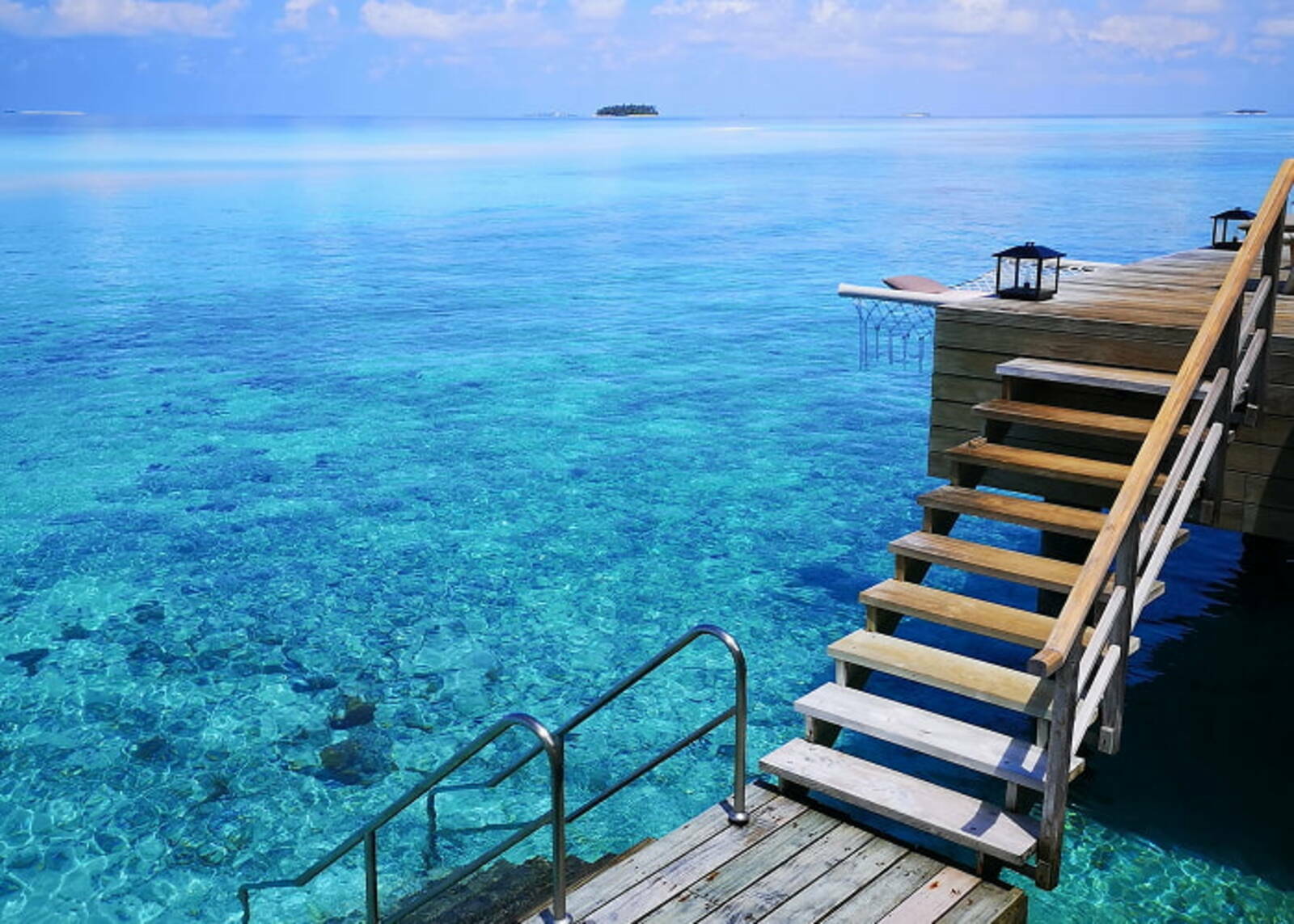
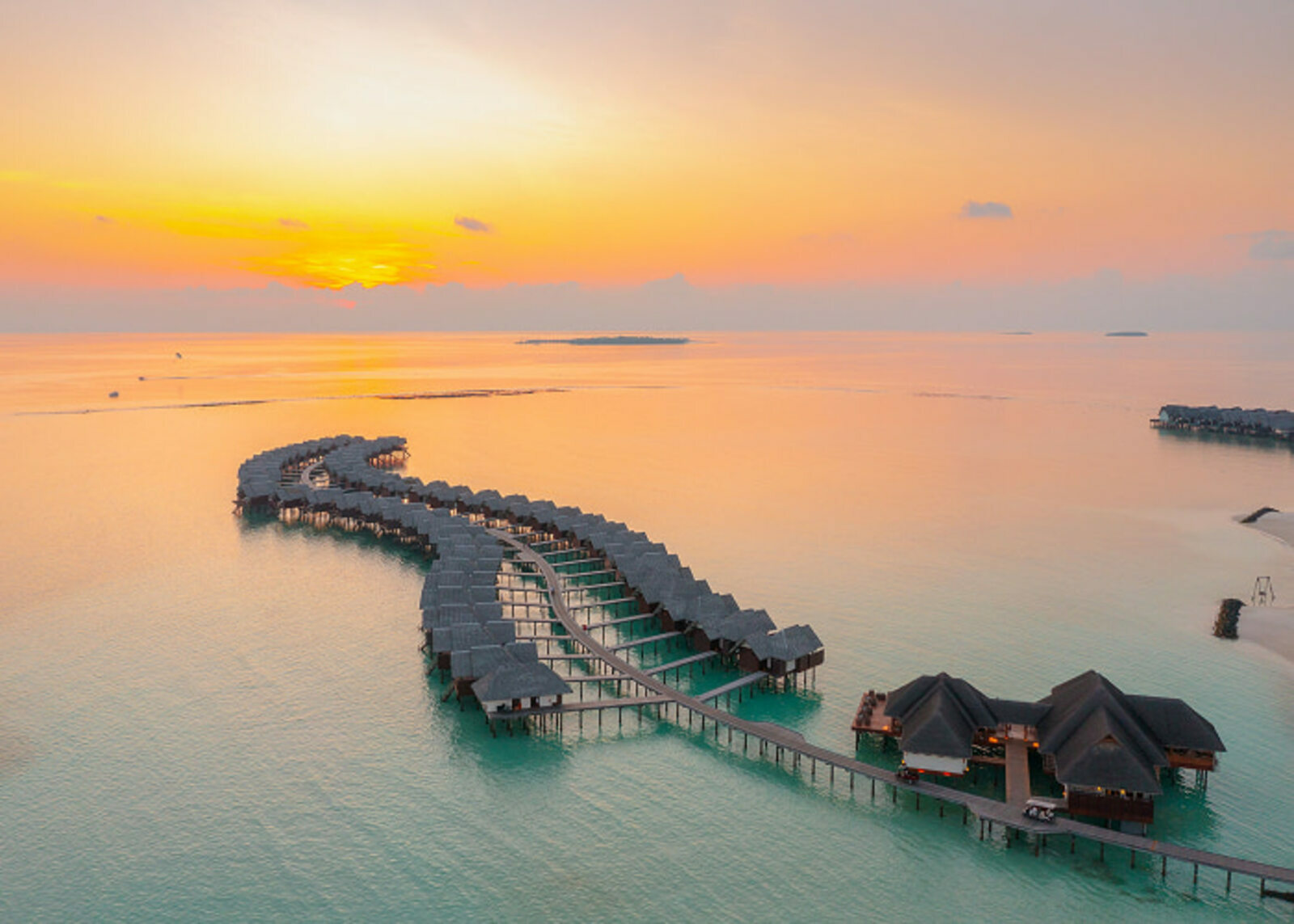
Houses on stilts stretch far into the lagoon. You can relax in mesh hammocks suspended above the water, watch the life of neon fish through glass panels in the floor, and go down into the warm water by your own ladder at any time of day or night.
A romantic vacation on Raa is complemented by refined candlelit dinners on the beach or on small uninhabited islands, relaxing SPA treatments, and Asian massage techniques.
Lifehack from Admiral Travel: to “light up” the night ocean for someone you love, wait for maximum darkness, preferably during the new moon, step knee-deep into the sea, and sharply move your palm through the water. From mechanical friction, billions of microscopic organisms will flash with bright blue sparks. It is an incredible, mystical sight that stays in your memory for a lifetime.
For families with children
Hotels on Raa Atoll can become a wonderful place for a family vacation, but the choice requires selectiveness from parents: not every island in this region is equally convenient for young travelers. It is worth booking a specialized “family resort” with a suitable shoreline and a kids’ club with professional animators, babysitters, and educational programs.
In the context of family vacations, Raa Atoll is most suitable for parents with school-age children who can handle a combined journey with interest. For families with toddlers, the long transfer to the north of the archipelago after an international flight from Chisinau or Bucharest may be tiring.
Important recommendation: when choosing the travel format, Admiral Travel managers recommend giving preference to the “domestic flight + boat” option instead of a seaplane: regular aircraft have air conditioning and a significantly lower noise level, which is much more comfortable for small children.
Before booking a family hotel on Raa, it is important to check whether the island has a 24-hour medical room and whether a children’s menu is provided. You can learn more about vacations in the Maldives with children here.
For snorkeling and diving lovers
A vacation on Raa is a gift for those who are genuinely interested in the underwater world. The local coral reef is in magnificent condition, as the northern waters have avoided mass tourist traffic and industrial impact. Practically every hotel has a certified PADI school, where you can take training or rent professional diving equipment.
A living, rich house reef located close to the shore allows you to snorkel at any time of day: right at the steps of your villa you will meet ocean inhabitants that cannot be seen in the Black Sea, along with entire schools of exotic fish.
For experienced divers, the channels of Raa Atoll offer exciting drift diving. Ocean currents carry you along underwater walls, canyons, and vertical cliffs — such as the legendary dive sites The Labyrinth or Nagili Thila. This is a unique opportunity to glide underwater without extra effort while watching tuna, barracuda, octopuses, and schools of grey reef sharks.
To make underwater walks bring only pleasure, Admiral Travel experts recommend following a few simple rules.
For a comfortable entry into the water from the shore, special shoes — aqua shoes — will be useful: they reliably protect your feet from coral fragments and bottom-dwelling creatures hidden in the sand.
When swimming with a mask, try to stay within the turquoise lagoon and avoid getting too close to the very edge of the coral wall: where the deep blue sea begins, noticeable ocean currents may appear.
The ocean here is a carefully protected reserve, so keep a distance of a couple of meters from the reef, do not touch corals with your hands, and do not frighten marine animals.
For those who want seclusion
Raa Atoll is perfect for a digital detox and mental health recovery: here you can put your phone aside and spend entire days listening only to the soft roar of the ocean and the rustle of palm leaves.
IT specialists, top managers, and major entrepreneurs from Moldova and Romania, tired of round-the-clock stress, often fly here because absolute silence has become the main thing missing from their lives. The islands have no intrusive animation or loud music, while room cleaning and service are carried out discreetly. This format is especially appreciated by those who want to read calmly, visit the SPA, swim with a mask, or simply spend most of the day by the ocean.
A vacation on Raa Atoll allows you to encounter island authenticity without noise and crowds of tourists. Maldivian cuisine is a union of three main elements: tuna, coconut, and spices, especially curry and chili. At hotel buffets on the atoll, a separate colorful corner is dedicated to local dishes, where you can calmly enjoy new flavors. Be sure to try mas huni salad made from lightly smoked tuna with grated coconut, wrapped in roshi flatbread, dhonkeyo kaju banana fritters, the sweet soup-pudding Saagu Kandhi, and coconut ice cream served directly in half a coconut shell.
For travelers who choose a high level of service
A vacation on Raa Atoll is the choice of demanding travelers who value impeccable yet delicate service. Each villa is assigned a personal butler (thakuru), who takes care of everything: from organizing SPA rituals to private picnics on uninhabited sandbanks.
The culinary concept of the region is built on the philosophy of “barefoot luxury”: the central restaurant hub is an open pavilion with a roof made of palm leaves, where the floor is sand. Here guests have access to a buffet with international cuisine, fresh tropical fruit (mango, passion fruit, papaya, rambutan), European cheeses, meat and poultry delicacies, as well as desserts from pastry chefs.
A separate area of the restaurant is dedicated to show cooking (Live Cooking Stations). Food is prepared right in front of you: chefs grill the morning catch over open flames, vegetables and pan-Asian noodles are quickly stir-fried in hot woks, and flatbreads are baked in clay ovens.
In addition to the main hub, premium resorts on Raa Atoll offer guests a system of à la carte restaurants spread across the island.
Under the Dine Around meal program, you can change such restaurants every evening — from a Japanese sushi bar above the waves to dinner in an Italian trattoria in the shade of palm trees.
Admiral Travel specialists recommend choosing extended meal plans such as all inclusive / dine around. Extra meals (when choosing “breakfast only” or “breakfast + dinner”) can turn into significant expenses, because in addition to high restaurant bills, government taxes and service charges are added — around 27–29% on top.
In-Villa Dining
A format for total relaxation away from people. Dishes are delivered to the villa in thermal containers, while the butler sets the table on the terrace of the overwater villa or directly on the sand. (Price: according to restaurant menus + delivery service charge of $10–$15).
Floating Breakfast
The main hedonistic ritual of the Maldives. A large rattan tray with food and drinks drifts in your pool (Price: $90–$160 for two; in Premium All Inclusive concepts it is often provided free of charge as a compliment).
Tip from Admiral Travel: When booking a premium vacation, it is important to choose not just the atoll, but the specific resort. Even neighboring islands on Raa differ greatly in atmosphere, quality of the house reef, lagoon size, and service. Our managers will help you choose the island that perfectly matches your idea of comfort.
Who Raa Atoll may not suit
We have examined in detail who Raa Atoll is suitable for, but it will almost certainly not meet the expectations of the following categories of travelers:
Seekers of vibrant nightlife and club culture. There are no discos until dawn, noisy bars, or lively streets here. The evening program at resorts means live acoustic vocals and an open-air cinema with beanbags right on the sand.
Travelers with a strictly limited budget. Due to the remoteness of the region, the total cost of a package here is objectively higher than on atolls located near Male.
People who are extremely afraid of small aircraft flights. The main type of transfer here is seaplanes or small domestic aircraft. If flights on light aircraft are unsuitable for you, it is better to choose North or South Male, where a closed speedboat will take you to the resort in 15–20 minutes.
Lovers of museums and classic sightseeing. The Maldives have no ancient ruins, old castles, or huge shopping malls, so the isolated island format may seem monotonous.
When is the best time to go to the Maldives
The best conditions for a holiday in the Maldives are provided by the dry season (January – March), which is suitable for snorkeling and family vacations, while the wet season (May – November) is characterized by short showers and waves, but package prices during this period are noticeably lower.
The climate of the Maldives depends on major oceanic monsoons and divides the year into two conditional periods.
From January to March, Raa Atoll is under the influence of the northeast monsoon (dry season): the weather is stable, sunny, and dry. The ocean in the lagoons is calm, and underwater visibility reaches a record 30 meters.
The wet season in the Maldives runs from May to November, the period of the southwest monsoon. Tropical showers and thunderstorms usually pass within 20–30 minutes, after which the sun shines brightly again; waves and stronger wind are possible. However, resorts on Raa Atoll offer big discounts during these months and often launch promotions with free accommodation for children.
In December and April, Raa has a transitional season; the weather in these months can be changeable, but the ocean most often remains calm, and the sun pleases tourists for most of the day.
How to choose a hotel on Raa Atoll
Here is a professional checklist from Admiral Travel:
1. Transfer logistics: seaplane or the combined option “domestic flight + boat”? Seaplanes do not operate at night, which is important when choosing your flight to Male.
2. House reef: how close is it to the shore and villas?
3. Shoreline features: how convenient is the entry into the sea, how strong are the low tides in this part of the atoll, and is the lagoon protected from large ocean waves?
4. Hotel concept: is it a family resort or a strictly secluded Adults Only resort?
5. Meal format: does the package include a premium all inclusive system with the Dine Around concept?
6. Accommodation specifics: beach villa or overwater villa?
7. Language comfort: does this resort have Russian-speaking or Romanian-speaking staff?
8. Island size: is it a tiny secluded island or a large nature resort?
9. Medical support: is there a permanent medical room on the island? We recommend extended insurance with coverage for active recreation and emergency evacuation.
Conclusion: who should choose a vacation on Raa Atoll
Raa Atoll is a premium, secluded, and incredibly picturesque region of the Maldives that is perfect for couples, honeymooners, lovers of untouched marine nature, and those looking for the highest level of private and eco-conscious service.
The journey will give you a deep reset and genuine peace in the middle of the beautiful Indian Ocean, especially if you consciously choose the right island resort, a convenient transfer format, and the optimal meal concept.
Video about the weather in the Maldives
FAQ: common questions about vacations on Raa Atoll
Where is Raa Atoll located?
Raa Atoll is located in the northern part of the Maldives, approximately 150–180 kilometers from the international airport in Male.
How do you get to Raa Atoll?
Most often, travelers use a seaplane to the hotel jetty or a domestic flight to Ifuru airport followed by a speedboat transfer.
Who is Raa Atoll best suited for?
It suits couples, honeymooners, snorkeling lovers, travelers looking for seclusion, and families when the resort is chosen correctly.
Is Raa suitable for holidays with children?
Yes, but it is better to choose a family resort with a convenient beach, kids’ club, medical room, and children’s menu.
When is the best time to go to the Maldives?
The best conditions are usually during the dry season, from January to March, especially for snorkeling, beach holidays, and family vacations.
How is Raa different from atolls closer to Male?
Raa is more secluded, less crowded, and valued for its living reefs, clear water, and modern eco-luxury resorts.
Can manta rays be seen on Raa Atoll?
Yes, large manta rays live near Raa Atoll all year round, and natural “cleaning stations” exist around the reefs.
Which is better: a beach villa or an overwater villa?
A beach villa suits those who love greenery and a private stretch of shore, while an overwater villa is for those who want direct access to the lagoon.
Is all inclusive worth it on Raa?
For a premium vacation, an extended all inclusive or dine around plan is often more convenient, because meals outside the package may be expensive.
Is there nightlife on Raa Atoll?
The format is calm: instead of loud clubs, resorts usually offer live music, open-air cinema, dinners, and relaxing evenings by the ocean.
What should be checked before booking a hotel?
Check the transfer format, house reef quality, lagoon comfort, hotel concept, meal plan, villa type, and medical support.
What should you bring for snorkeling on Raa?
A mask, sun protection, and aqua shoes are useful for comfortable entry into the water from the shore, especially near corals.