 Enter
Enter




Zanzibar without surprises: what to understand before booking
Zanzibar weather by month changes in a completely different way from Moldova and Romania, where we are used to a clear change of seasons. On the islands of African Tanzania, tropical summer reigns all year round, and beach holidays are affected not so much by temperature as by humidity and monsoon winds.
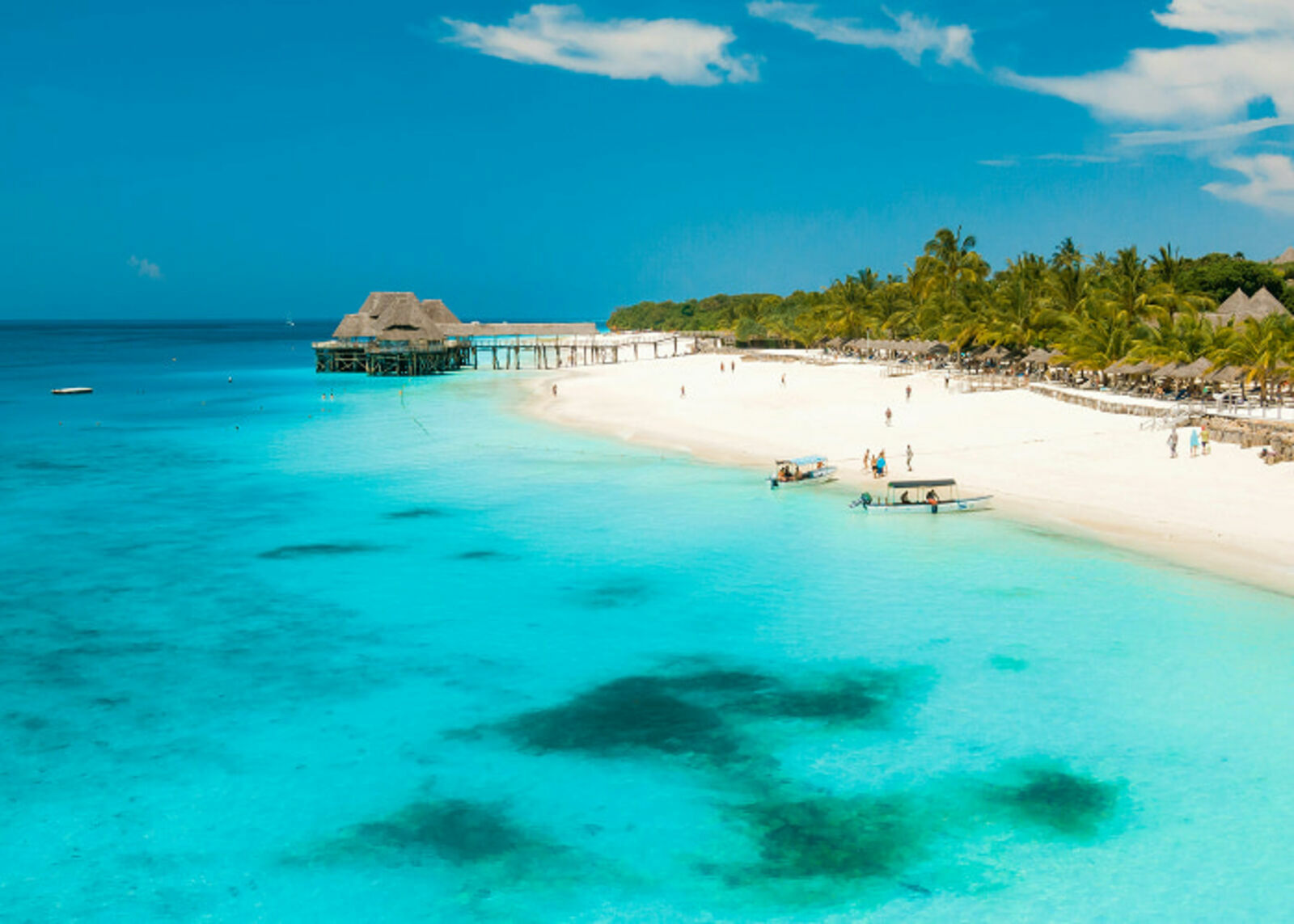
Zanzibar, incredibly exotic thanks to the turquoise Indian Ocean and white sand that looks like powdered sugar, is at the same time unexpectedly close to people from our region. Mangoes and pineapples grow alongside tomatoes familiar to us, and the main local dish — ugali — is a close sister of our mămăligă.
The island of “Hakuna Matata”, as it is often called, promises a carefree seaside holiday… if you arrive at the right time. So when is the best time to fly to Zanzibar to catch the dry season — without strong winds and long rains?
Top highlights
Key takeaways before your trip
Best beach months: June–October and January–February.
Most risky month: April, the peak of long tropical rains.
For diving: February, September, and October, when the water is especially clear.
With children: July, August, and September, especially the northern beaches of Kendwa and Nungwi.
Main natural feature: tides can transform the beach every 6 hours.
Zanzibar climate: what to know before travelling
Zanzibar’s climate is called monsoon or subequatorial, because the archipelago lies only 6 degrees south of the Equator. Air temperature here stays around +27…+33 °C all year round, and the Indian Ocean rarely cools below +25…+26 °C. Even the local “winter” (June–August) feels more like a European summer. At +25…+28 °C, locals sometimes put on hoodies “because it is cold”, while tourists from Chișinău and Bucharest happily swim in the ocean.
The main conductors of local weather are two large monsoon winds:
Kaskazi monsoon
It blows from the northeast from December to March. It brings hot, humid air from the Arabian Sea.
Kusi monsoon
It arrives from the southeast and dominates from May to October. This wind is cooler, stronger, and drier.
The arrival and retreat of the monsoons create four climate periods in Zanzibar, each influencing island life in its own way.
Hot dry season (January — February)
Zanzibar in January and February is the hottest time of the year: the island usually has +32…+34°C, while the ocean warms up to +29…+30°C. The sea is especially clear and calm at this time.
* During this period, the island has a fruit boom: mangoes, pineapples, watermelons, and passion fruit are sold literally at every corner.
Main rainy season (March — May)
The rainy season in Zanzibar is connected with the Masika period — equatorial downpours. The ocean remains warm — +27…+29°C — but often becomes cloudier and rougher.
The peak of the rains usually falls in April, while tides are especially noticeable in March and May.
* On the other hand, the rainy season brings bright greenery to the island, and coconuts, star fruit, hot peppers, and plantains — green bananas eaten instead of potatoes — are sold very cheaply at the markets.
Main dry season (June — October)
This is the most comfortable period for most tourists, because the Kusi monsoon brings drier air and reduces the tropical stuffiness.
Beach holidays in Zanzibar are especially good at Nungwi and Kendwa: the ocean is calmer here, and the tides are less noticeable. On the east coast — in Paje and Jambiani — the wind gets stronger, so kitesurfers from all over the world come here.
* Jackfruit, custard apples, and tiny sweet “lady finger” bananas ripen in large quantities on the island.
Short wet season (November — December)
In November, Zanzibar opens the season of short rains — Vuli (a shower may last 20–30 minutes, and then the sun appears again). This period is still suitable for beach holidays if tourists are not bothered by changeable weather.
* In December, Tanzania comes alive before the New Year holidays, the weather improves, and the streets smell of ripe citrus fruit.
* Tides in Zanzibar are an important natural feature. Every 6 hours, the ocean retreats hundreds of metres, exposing the seabed with sea urchins and algae. To swim without checking the lunar calendar, choose the northern beaches of Nungwi and Kendwa — the effect of low tide is minimal there.
Zanzibar weather by month
January in Zanzibar — African summer
The weather in Tanzania in January feels like the height of our summer! The heat is especially welcome after wet snow in Chișinău or Bucharest. With temperatures of +31°C…+33°C and an ocean as warm as fresh milk (+28°C…+29°C), you will not want to get out of the water at all. Short tropical showers are possible, but they pass quickly.
Why should you go to Zanzibar in February?
February in Zanzibar is a consistently hot and dry month, and the Kaskazi wind calms down. Tours to Tanzania from Moldova and Romania are often booked precisely for this month, because conditions for swimming and diving are excellent: ocean water reaches its temperature peak (+29°C…+30°C) and is clear as glass. In addition, the Sauti za Busara festival with energetic African music takes place on the island in February.
Zanzibar weather in March — the rains begin
In March, the rainy season comes to Zanzibar, and dense clouds cover the sky more and more often. The air becomes heavy, like in a hammam. Although the water is still very warm (+29°C), there are fewer tourists. If you are planning island excursions, hurry before the dirt roads are washed out.
April in Zanzibar — peak rainy season
Zanzibar in April is the time of long rains. Warm weather with 80–90% humidity is not enjoyable: swimming is uncomfortable, and the ocean can be rough. Excursions and sea activities are often limited.
May weather on the island — the end of the wet season
Zanzibar in May is a transitional month. The rains gradually weaken, air temperature drops to +28°C…+29°C, and the ocean cools to +26°C…+27°C. Swimming can be uncomfortable on the east coast because of strong winds and sediment lifted from the seabed. Tour prices are at their lowest during this period.
June in Zanzibar — the beginning of African “winter”
Zanzibar weather in June already pleases visitors with dry air, and the rains become rare. The water is refreshing but comfortable (+26°C), while the air warms to a pleasant +28°C. Nights become fresh (+21°C…+22°C, so a light jacket may be useful). June is a wonderful time for excursions to spice plantations and to Prison Island to see the giant tortoises.
Zanzibar in July: holidaymakers, kitesurfers, and cinema
July in Zanzibar is the peak of the high season, with consistently dry and comfortable weather. During the day, the thermometer shows around +27°C…+28°C, and the fresh sea breeze makes the climate softer. The wind can be strong in the south of the island, so kitesurfers from different countries gather in Paje. Also in July, actors and journalists come to Zanzibar — the annual ZIFF film festival takes place in Stone Town.
August — a great time for a family holiday in Zanzibar
In August, your holiday will be full and active: it is dry, warm, and comfortable for beaches and island trips. It is a good time to discover Paje and Jambiani, where the ocean becomes especially interesting during low tide. August is also a good time for a safari trip to Selous, where animals come out to the watering places.
Zanzibar weather at the end of summer is especially good for family holidays with children, because there is no suffocating heat.
Velvet season in Zanzibar in September
When leaves are already turning yellow in Moldova, Zanzibar enjoys warmth up to +29°C…+30°C, the Kusi wind calms down, and the ocean becomes peaceful and warms up to +27°C. Zanzibar in September is a velvet season with maximum water clarity and quieter beaches. Conditions are suitable for deep diving near Mnemba Reef.
Zanzibar in October: the start of short rains
In October, the air gradually becomes more humid. Toward the end of the month, the first signs of seasonal change may appear as light night rains. This is a good “borderline” month: it is still comfortable, daytime temperatures are around +31°C, and the ocean is gentle and warm (+27°C…+28°C). October in Tanzania is a time of religious holidays in Muslim communities, the streets are decorated with lanterns, and the atmosphere becomes family-like.
Zanzibar in November: yes or no?
If you buy a Zanzibar tour for November, you should be ready for sudden heavy showers that may turn into sunshine and a rainbow half an hour later. The warm sea and hot, humid air still allow swimming, while package holiday prices from Chișinău and Bucharest are comparatively low.
Zanzibar before New Year
In the first half of December, Zanzibar may still catch the tail of the short rains, but by the 20s stable hot weather sets in (+32°C). The ocean warms up to +29°C. This is the time when it is better to go to Zanzibar for bright sunshine and an exotic New Year under palm trees. Holiday prices rise, and the climate becomes very comfortable.
Zanzibar climate: monthly overview
January
Daytime air temperature: +31…+33 °C
Water temperature: +28…+29 °C
Rainfall: 60–90 mm
Suitable for holidays? Suitable
Expert’s short comment: Hot African summer
February
Daytime air temperature: +32…+34 °C
Water temperature: +28…+29 °C
Rainfall: 40–80 mm
Suitable for holidays? Suitable
Expert’s short comment: Dry and hot month, best visibility for diving
March
Daytime air temperature: +31…+33 °C
Water temperature: +28…+29 °C
Rainfall: 130–150 mm
Suitable for holidays? Limited
Expert’s short comment: Humidity increases toward the end of the month
April
Daytime air temperature: +28…+30 °C
Water temperature: +27…+28 °C
Rainfall: 350–400 mm
Suitable for holidays? No
Expert’s short comment: Peak of long tropical downpours
May
Daytime air temperature: +27…+29 °C
Water temperature: +26…+27 °C
Rainfall: 200–220 mm
Suitable for holidays? Limited
Expert’s short comment: Rains decrease, often windy
June
Daytime air temperature: +27…+28 °C
Water temperature: +25…+26 °C
Rainfall: 40–50 mm
Suitable for holidays? Suitable
Expert’s short comment: Fresh, comfortable, humidity drops
July
Daytime air temperature: +26…+28 °C
Water temperature: +25…+26 °C
Rainfall: 20–30 mm
Suitable for holidays? Suitable
Expert’s short comment: Height of the dry season
August
Daytime air temperature: +27…+28 °C
Water temperature: +25…+26 °C
Rainfall: 30–40 mm
Suitable for holidays? Suitable
Expert’s short comment: Dry, warm, worth travelling with children
September
Daytime air temperature: +28…+30 °C
Water temperature: +26…+27 °C
Rainfall: 40–50 mm
Suitable for holidays? Suitable
Expert’s short comment: Velvet season, calm sea
October
Daytime air temperature: +30…+31 °C
Water temperature: +27…+28 °C
Rainfall: 60–70 mm
Suitable for holidays? Suitable
Expert’s short comment: Balance of warmth and dryness
November
Daytime air temperature: +31…+32 °C
Water temperature: +28…+29 °C
Rainfall: 110–130 mm
Suitable for holidays? With reservations
Expert’s short comment: Short rainy season
December
Daytime air temperature: +31…+33 °C
Water temperature: +28…+29 °C
Rainfall: 100–110 mm
Suitable for holidays? Suitable
Expert’s short comment: Start of the high New Year season
* It is important to remember that Zanzibar weather can vary from year to year: the timing of rains, wind strength, and humidity depend on monsoon activity and ocean currents.
When is the best time to go to Zanzibar?
There are at least two periods when it is best to go to Zanzibar: the two dry seasons on the archipelago.
For an ideal beach holiday and sunbathing, choose June–October or January–February.
For snorkelling and diving, February and September–October are optimal. During these periods, underwater visibility near coral reefs reaches a record 30 metres.
For savings, while accepting weather risks, pay attention to March, May, and November. Hotels offer good discounts, and airlines reduce fares.
For a trip with children, July, August, and September are the best choice. The main thing is to choose the windless northern lagoons, especially Kendwa.
For excursions: June–October.
Rainy season in Zanzibar
The idea of “rainy season” in Zanzibar includes two fundamentally different natural phenomena:
Long rains: March–May, with the peak in April.
Short rains: November–December.
Long rains (Masika) are real equatorial walls of water. Downpours wash out dirt roads, the ocean is often stormy, and it brings a lot of seaweed to the shore.
Short rains (Vuli) are a very comfortable period. A shower pours down like a powerful warm shower for 15–20 minutes and disappears, leaving freshness and the scent of tropical flowers behind, while the sun instantly dries the beaches.
Water temperature in Zanzibar
The water temperature in Zanzibar never fails to impress travellers used to the unpredictable Black Sea. In this part of the planet, the Indian Ocean never cools below +25 °C. You can enter the water at three in the morning or seven in the morning — it will always remain comfortable.
The warmest ocean awaits you from December to April, when the water warms up to +28 °C...+29 °C. In June, July, and August, the water cools to its annual minimum — around +25 °C...+26 °C. In terms of feeling, this water seems incredibly refreshing, clean, and invigorating, becoming a real rescue from the midday heat.
Which months are better to avoid?
A review of Zanzibar weather by month allows us to draw the following conclusions:
April is the riskiest month: this is the time of maximum discomfort due to humidity, closed infrastructure, and lack of logistics for excursions.
March and May are transitional months with instability.
November has changeable weather with short rains, but with the right choice of hotel on the northern coast, the holiday can be wonderful.
Beaches and island atmosphere
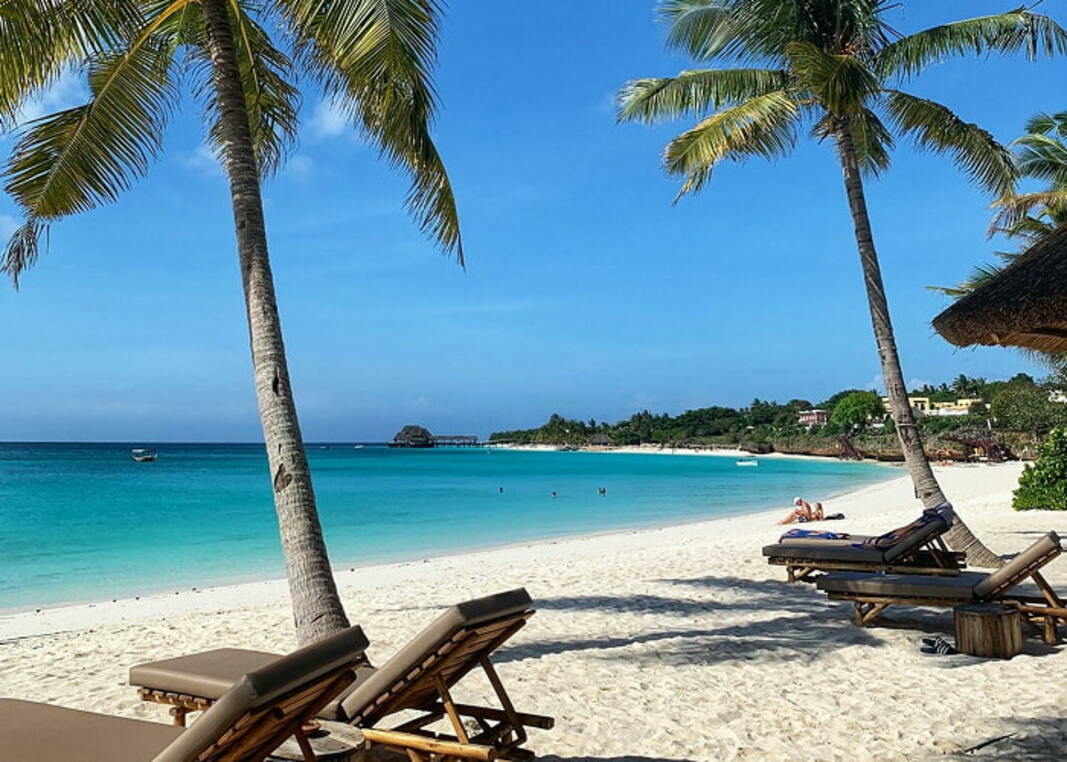
Kendwa
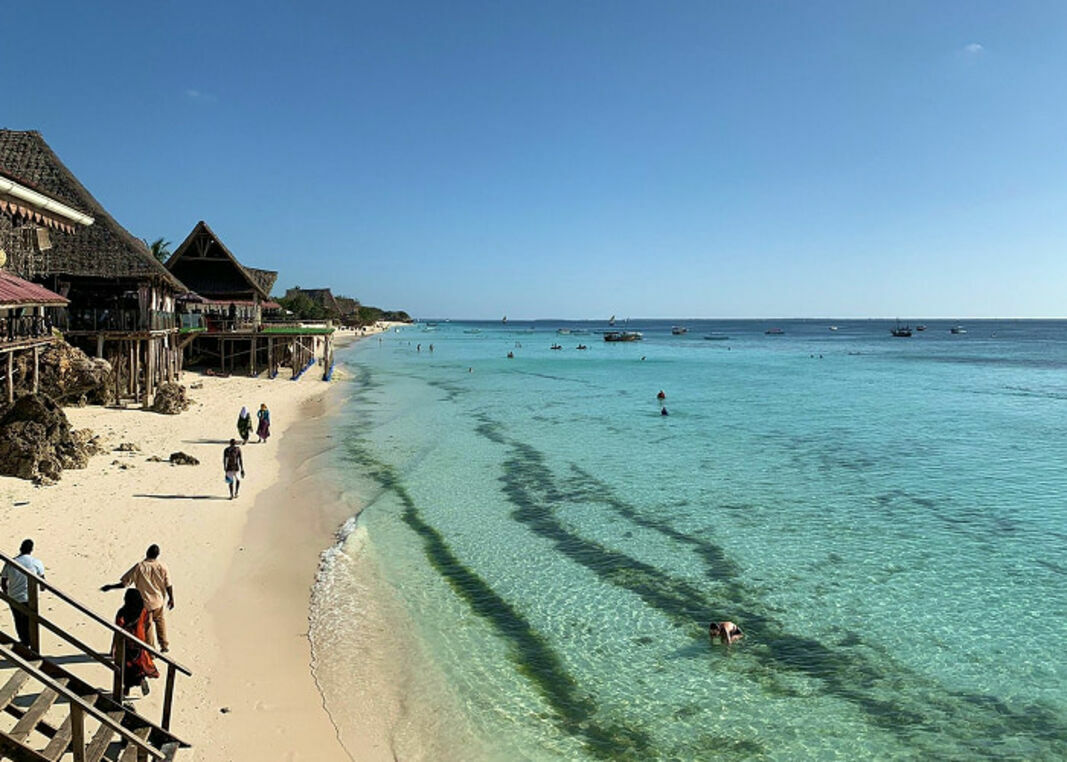
Nungwi
A holiday in Zanzibar with children or friends is an unforgettable adventure for those who want to see Africa the way it is shown in films: palm trees, azure ocean, and soft light sand. Here you can dive to coral reefs, try unusual fruits, or taste tender octopus cooked right on the beach in coconut milk!
We will be happy to become your guides to the hospitable island of Hakuna Matata, because the mission of Admiral Travel is to give carefree holidays, wherever you go!
Frequently asked questions about Zanzibar weather
When is the best time to go to Zanzibar?
Many travellers say that the best month for a Zanzibar holiday is February or September, when the ocean is especially calm and humidity is lower.
When is the rainy season in Zanzibar?
March–May is the long rainy season, while November–December is the short rainy season.
Can you go to Zanzibar in April?
If you are going to Zanzibar on holiday, weather is the main factor. April is not recommended if your goal is a classic beach holiday.
What is the weather like in Zanzibar in winter?
Our winter is their summer. In January and February, it is hot (+32°C…+34°C), the ocean is at its warmest, and rare evening thunderstorms are possible.
What is the weather like in Zanzibar in summer?
From June to August, it is dry, the air temperature is around +27°C, and pleasant cool breezes blow.
When is the sea warmest in Zanzibar?
Usually at the beginning of the year and closer to December–April. Peak water temperatures (+29°C…+30°C) are recorded in February and March.
Are there hurricanes in Zanzibar?
No. Zanzibar’s climate is safe in terms of cyclones and hurricanes.
Is Zanzibar suitable for holidays with children?
Yes, especially in July–September on Kendwa and Nungwi beaches, where there are no strong waves, the sandy entrance is gentle, and the temperature is comfortable without suffocating heat.
Which beaches are less affected by low tide?
For swimming without depending too much on the lunar calendar, it is better to choose the northern beaches of Nungwi and Kendwa.
When is the best time to go to Zanzibar for diving?
The best periods for snorkelling and diving are February, September, and October, when visibility near the reefs is especially high.
When is it cheaper to holiday in Zanzibar?
Lower prices are often available in March, May, and November, but weather risks should be considered during these months.
Do you need warm clothes in Zanzibar?
In June–August, evenings can feel fresh, so a light jacket or hoodie can be useful, especially for walks and excursions.