
 Enter
Enter






In December 2024, a new high-speed daytime train began operating between two of Europe’s most important capitals – Berlin and Paris. It is an important milestone in the world of rail transport, because until then travellers between these cities either had to make at least one transfer or use a night train that took around 13 hours.
The new train, which now runs every day, reduces travel time to around eight hours – a record journey time on this route. It departs from Paris’ Gare de l’Est at 9:55 in the morning and arrives at Berlin Central Station at 6:03 in the evening. The return service leaves Berlin at 11:54 in the morning and reaches Paris at 7:55 in the evening.
Direct daytime Berlin – Paris train with no transfers and a journey of about eight hours between the capitals.
Daily service: morning departure from Paris and late-morning departure from Berlin – perfect for business trips and city breaks.
Route via Strasbourg, Karlsruhe and Frankfurt am Main – ideal for stopovers and multi-city itineraries.
A modern alternative to the ÖBB Nightjet night train, which runs three times a week and takes around 13 hours.
The service launched on 16 December 2024, with tickets having gone on sale on 16 October 2024, starting from around €59 one way.
A joint Deutsche Bahn and SNCF project that strengthens rail cooperation between Germany and France and improves passenger options.
Why the new Berlin – Paris train is a game changer
Before this service launched, a daytime trip between the capitals usually took between 9 and 10.5 hours and included at least one transfer. The new route is therefore the fastest and most convenient option for travellers who prefer to journey during the day. It is also a modern alternative to the existing ÖBB Nightjet night train, which runs only three times a week and needs around 13 hours to cover the distance.
This new route opens up great possibilities for travellers who want to enjoy the beauty of Germany and France, travelling between Berlin and Paris more quickly and comfortably than ever before. Passengers can experience the comfort and speed of modern rail travel on one of Europe’s most popular routes.
Via Strasbourg, Karlsruhe and Frankfurt am Main
The launch of the new ICE high-speed train took place on 16 December 2024. On its way, the train calls at major cities such as Strasbourg, Karlsruhe and Frankfurt am Main, making the route even more attractive for passengers. Tickets for this train went on sale on 16 October 2024, with prices starting at around €59 for a one-way journey.
This project is also an important step in strengthening cooperation between German rail operator Deutsche Bahn and its French counterpart SNCF, which are working together to improve transport solutions for passengers across Europe.
Source
Source: euronews.com
How to make the most of a Berlin – Paris trip on the new train
The new daytime train is ideal for travellers who love to combine the journey itself with new experiences. Around eight hours on board give you time to work on your laptop, enjoy the scenery, read or fine-tune your plans for exploring the capitals. Unlike a night train, you keep to a normal daily rhythm and arrive in the evening, ready to check in at your hotel and head out for dinner in the city.
Another big plus is the cities along the route. You can plan your trip with stopovers: spend a day in Strasbourg, then continue via Karlsruhe or Frankfurt am Main, and finally reach Berlin or Paris. This format is perfect if you want to see more of Europe in a single journey, without spending extra hours in airports or dealing with complex transfer connections.
For families travelling with children, a daytime train is often more comfortable than a flight: more space, freedom to move along the carriage and easier handling of luggage. And for travellers who care about sustainability, rail is a more climate-friendly choice on one of Europe’s most popular routes.
Suggested 1-day itinerary: Paris → Berlin by train
In the morning, you leave Paris from Gare de l’Est at 9:55 and spend the day travelling in comfort: breakfast on board, a few productive working hours, then lunch in the dining car or with snacks you bring along. The journey takes around eight hours, so by 6:03 p.m. you are already at Berlin Central Station.
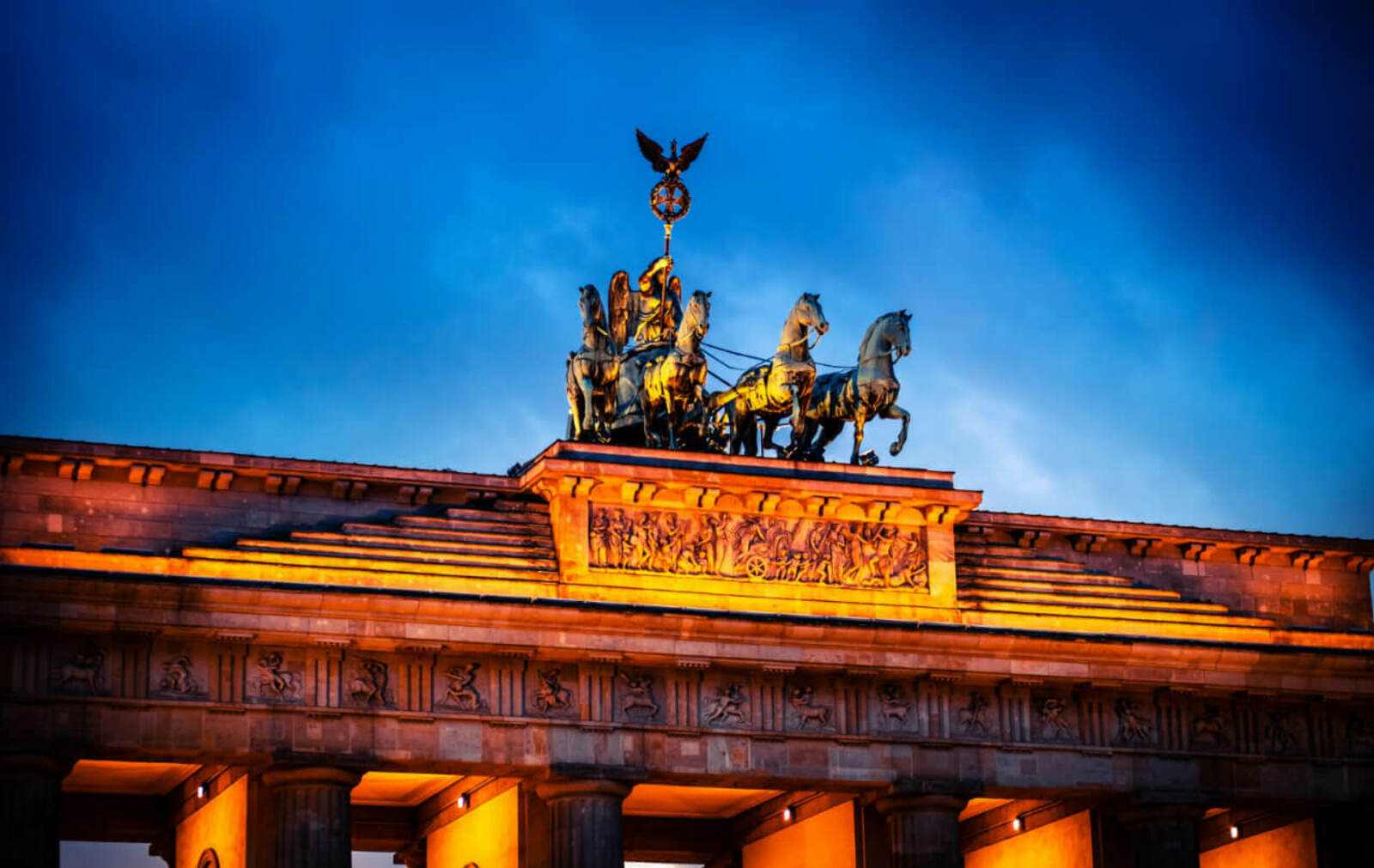
After arrival, you can check into a hotel near the station and head out for an evening walk: Brandenburg Gate, Potsdamer Platz and dinner in a local bistro. This scenario works well for a short business visit or as the start of a longer trip through Germany.
The return trip Berlin → Paris is just as easy to plan as a one-day journey: departure at 11:54, arrival at 7:55 p.m. You have time for a relaxed breakfast in Berlin and a late dinner in Paris, without spending the night on the road and without the stress of airport procedures.
Suggested 2-day itinerary: with a stopover on the way
Day 1 can be dedicated to travelling from Paris or Berlin with a stop in one of the intermediate cities – for example, Strasbourg. You leave in the morning, spend a few hours on the train and then step out into a city with a charming historic centre, narrow streets and a famous cathedral. In the evening, enjoy dinner in a traditional restaurant and stay overnight.
Day 2 is for continuing your journey to the final destination: you board a later train and by the evening you arrive in Berlin or Paris. This way, you combine the advantages of a fast direct route with the pleasure of discovering another European city, without making your travel plan unnecessarily complicated.
Such a two-day scenario suits both families with children and seasoned travellers: a more relaxed pace, fewer long hours in one stretch on the train and far more memories than you would get from a simple direct flight between two capitals.
Getting between Berlin and Paris: the new train and alternative routes
Before the new daytime service, most travellers between Paris and Berlin chose routes with transfers or the night train, with a journey time of about 13 hours. The direct ICE train simplifies everything: a single service, a clear timetable and central stations at both ends.
Flights remain an alternative, but the train has clear advantages in comfort: less time spent on check-in and security checks, fewer baggage restrictions and arrival right in the heart of the city. For those planning a wider tour of Germany or France, the train can easily be combined with other national and regional rail services.
If you are looking for a more sustainable way to travel, want to avoid airport stress and at the same time save time compared with transfer-heavy routes, the new daytime Berlin – Paris train becomes one of the most attractive options for this important European connection.
Frequently asked questions about the new Berlin – Paris train
How long does the trip on the new Berlin – Paris train take?
The journey takes around eight hours without any transfers, which is significantly shorter than most previous daytime routes.
How often does the new train run between Berlin and Paris?
The daytime train is planned as a daily connection, with one service per day in each direction.
When did the new Paris – Berlin daytime train launch?
The official launch of the new ICE high-speed train took place on 16 December 2024.
Which cities does the train pass through on the way?
The train runs via Strasbourg, Karlsruhe and Frankfurt am Main, making it attractive for stopovers as well.
How much do tickets on the new Berlin – Paris train cost?
Ticket prices start from around €59 one way, with the final fare depending on the date of travel and the class you choose.
Do I need to change trains between Berlin and Paris?
No. The new train is a direct service connecting Berlin and Paris without any transfers, saving time and reducing the risk of delays.
Is there still a night train between Paris and Berlin?
Yes. In addition to the daytime route, the ÖBB Nightjet night train continues to run, with a journey time of about 13 hours and a frequency of three times per week.
How is this train different from previous daytime options?
Previously, daytime journeys took 9–10.5 hours and required at least one transfer. The new route offers a record journey time of about eight hours and eliminates transfers entirely.
What type of train is used on the Berlin – Paris route?
The route is operated by a high-speed ICE train, the result of close cooperation between Deutsche Bahn and SNCF.
When did tickets for the new train go on sale?
Tickets became available for booking from 16 October 2024.
Who is this route best suited for?
It is ideal for travellers who prefer daytime train journeys, value comfort and want to get quickly between Germany and France, with the option to stop in cities along the way.
Does the new train strengthen cooperation between Deutsche Bahn and SNCF?
Yes. The project is an important step in deepening cooperation between Deutsche Bahn and SNCF and in developing better transport solutions for passengers across Europe.